

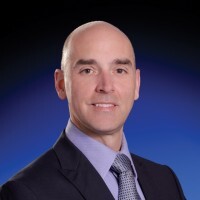
In this episode, special guest host Mike Wirth (Chief Growth Officer at Medaxion) sits down with Joe Rodrigo, DO, FAOCA of ProMedical to break down one of the biggest questions facing healthcare leaders today: should hospitals employ anesthesiologists or outsource? Dr. Rodrigo shares why the answer isn’t as simple as it seems, explaining the hidden costs, operational challenges, and long-term risks of employment models. They also discuss private equity’s role in rising costs and why many systems regret rushing into major staffing decisions. This conversation offers a practical look at how healthcare leaders can avoid costly missteps and make more informed decisions.
Welcome to Anesthesia Economics, where healthcare leaders and innovators discuss the industry's most pressing challenges: escalating costs, provider shortages, and the data-driven future of perioperative care. Hosted by Jeff McLaren, CEO of Medaxion, listen in for peer-to-peer conversations that move beyond the status quo to define the next generation of anesthesia leadership.
 Jeff McLaren founded Medaxion in 2008 to maximize information technology opportunities in the anesthesia market. Previously, he served as co-founder and CEO of Safer Sleep, LLC, a provider of anesthesia safety and record automation services in New Zealand and the UK. Jeff began his healthcare technology career as co-founder, President, and Chief Product Officer of HealthStream, Inc.
Subscribe and Listen on Spotify & Apple Podcasts
Watch
Read
Mike Wirth (00:06):
I'm Mike Wirth. I'm with Medaxion here at the Anesthesia Economic Summit in Charleston, South Carolina. I'm here with Joe Rodrigo, president and founder of ProMedical. Joe is a practitioner. He does a tremendous amount of work with organizations all across the country, and we're talking about all things anesthesia. Joe, one of the topics that has come up here at the summit is really around this notion of to employ or not to employ anesthesiologists. Now, you know that it's not that simple. Tell us why.
Joe Rodrigo (00:38):
Yeah, exactly. So we're in 2026. 20 years ago, I would say the majority of anesthesiologists were employed in some form, not necessarily directly with a hospital, so a private group or something. In the period of time between then and now, a lot of people have ventured off into locums work, independent contractor work. And so you've got that dichotomy of W2 versus 1099. But then when you talk about an employment model versus other type of models for a hospital system, that's kind of another angle that we'll look at. And so to employ or not to employ. So you're a healthcare executive, CEO of a hospital, president of a hospital, and you're having trouble with your anesthesia coverage. The group, private group isn't meeting your needs or the costs are going up, your subsidies are going up and you're thinking about making a change. And so one of the thoughts is, "All right, I can do this myself.
(01:48):
Let's bring everyone in and I'll employ them." And when I sit down with the healthcare leaders, I said, "All right, well, what is the reason why you want to employ?" Think about what's going on.
Mike Wirth (02:01):
What do you often hear from them?
Joe Rodrigo (02:03):
Most of the time is cost. There's cost or the anesthesia group is not fulfilling their contract because they can't supply the needs. And it's usually directly related to cost because the group typically at that point is having trouble recruiting and they either need to pay more or there just isn't the availability of the providers out there. So I always ask them, "What's the reason you want to insource and employ?" And they will give me their answer. And I said, "Well, really the only thing you gain out of employment is control." Costs will probably be the same or higher to insource.
Mike Wirth (02:40):
Interesting.
Joe Rodrigo (02:40):
Because your startup costs are going to be astronomical the first couple, two or three years. And then the infrastructure that you have to build internally-
Mike Wirth (02:50):
Ancillary support to-
Joe Rodrigo (02:51):
Support, scheduling, practice managers, everything else. Suddenly there's all of these other costs that you didn't really think of. You're thinking of a fixed cost of anesthesia just to cover ORs, but really what you're doing when you're employing is you're actually building another business inside of your business, which is going to cost more money. So I always ask them, "Why do you want to do this? " If there's some way to salvage your relationship with the previous group, maybe both sides, they're looking at things differently. They can come together, maybe talk, maybe have a mediating type of session.
Mike Wirth (03:28):
Interesting.
Joe Rodrigo (03:29):
Where, all right, is it just money? Is it coverage or is it expanded coverage? Or what is it? And try to really get in the room to see if you can get to a common ground because sometimes you want to keep these people. These are good providers. There's no guarantee these providers are going to come over as an employed model.
Mike Wirth (03:47):
Or if they do, might not be there very long anyway, right?
Joe Rodrigo (03:51):
Right, exactly. So a lot of times private groups, not necessarily a third party management company, but a private group, they love their autonomy and they love to be able to function in that private practice world, even though they're tied to the hospital and in some ways they're employees because they accept money from the hospital, but they still are-
Mike Wirth (04:12):
Anchor to the community.
Joe Rodrigo (04:13):
Yeah. And all of those types of things. So that's the biggest thing that I ask the healthcare leaders is, why are you doing this? Now, sometimes there's just no way to get past the hump. And I've been involved in several of those and it's been very difficult lawsuits and in one instance, the group fired the hospital and most instances the hospital fired the group.
Mike Wirth (04:44):
I'm so sorry guys. Oh my gosh.
Joe Rodrigo (04:47):
No worries.
Mike Wirth (04:47):
I'm so sorry.
Joe Rodrigo (04:48):
You need a doctor? There's a few out there.
Mike Wirth (04:50):
Oh my gosh. Something just all of a sudden, my eyes like watering. Sorry, Joe. No worries. You were on a roll too. All right. We'll walk back, pick it up from ...
Joe Rodrigo (05:06):
Yeah.
Mike Wirth (05:10):
Man, what the heck? I don't smoke either.
Joe Rodrigo (05:14):
I can just continue.
Mike Wirth (05:15):
Yeah, you're great.
Joe Rodrigo (05:18):
So after we try to figure out why they want to make a change, and if that relationship is not repairable, then I always tell them, "Put out an RFP, exhaust your options on the free market with a management company." Okay. And the reason why I say that is because again, insourcing and the infrastructure and everything else that you need to develop to be able to insource sometimes takes a really long time. And if you don't have a significant amount of time to build that infrastructure, then you're trying to build it as you're bringing these providers in, which-
Mike Wirth (05:55):
But you're really encouraging folks to, let's walk through every scenario here.
Joe Rodrigo (06:00):
Absolutely.
Mike Wirth (06:01):
And really embrace what you're doing.
Joe Rodrigo (06:02):
Absolutely.
Mike Wirth (06:02):
And that's really what you're having them do.
Joe Rodrigo (06:03):
My job, I feel, is more of to make sure people don't make missteps as opposed to tell them how to fix everything. Yeah. Because there's no simple fix. There's no secret sauce or fairy dust. It's really about, all right, let's not make a mistake that's predictable. And so I want to walk them all the way through that. And sometimes outsourcing to a third party company is the right answer. Sometimes it's not. Sometimes employment's the right answer. Sometimes it's not. And so I really, I stress to them, think about how disruptive this decision's going to be and make sure you're making the right decision with all the information that you have.
Mike Wirth (06:50):
So employment might be the right tool, but let's just not leap to that as a proxy to solve a problem-
Joe Rodrigo (06:56):
Correct.
Mike Wirth (06:57):
-that might be solved elsewhere.
Joe Rodrigo (06:58):
I think we've got a lot of examples over the last 10 years or so of that exact thing where healthcare systems feel like, let's just leap right to it. They think that's the fix, but it's really not the fix. There's been several healthcare systems that have tried to employ, then had to go back out and bring in a management company or recontract with a private group because it didn't work out, because they didn't build the infrastructure correctly and they weren't going about it for the right reasons.
Mike Wirth (07:24):
Let's talk about ... I'm going to come back to the right reasons in just a moment. Third party, outsourcing. I know that there's been a lot of commentary around private equity backed employment companies. Perhaps oversimplification of this being the root of all evil, perhaps is the root of all evil. How would you comment on that?
Joe Rodrigo (07:50):
I don't think it's necessarily the root of all evil. I think a lot of the issues that we have in healthcare have a lot to do with our healthcare system in total. Our payers, the way the insurance companies reimburse us where everything's kind of cut back. But private equity in its early forms, people thought was great, especially the physicians that were bought out by these groups and got some money in their pocket, but there's a lot of people now that believe that they are kind of the root of it because they come in, they over promise, under deliver, and they're increasing healthcare costs unnaturally because when they initially come in, they purposely come in a little bit low to make it look good and then they start ratcheting up the cost. I think the average contract that a private equity, third party management group is about three years.
(08:54):
They come in and they try to recover all of their cost and profit margin in the first three years because they don't know if they're going to get a second chance at it. And a lot of times they don't. And sometimes they do. And a lot of times the healthcare executives are scared to make a change because they made one change. They don't want to have to do it again. So then they just start paying the increased cost more and more and more. And some of those costs are legit, not that they're purposely gouging, but they've got a 30 to 40% profit margin that they have to meet for their investors. And so it's an interesting thing. You see private equity getting out, because honestly, the only way private equity can meet their margins now is the subsidies paid for by the hospitals. We don't generate enough revenue and collections for anesthesia specifically to cover our own costs.
(09:48):
So we are reliant on healthcare systems to subsidize us. That's how they make their money.
Mike Wirth (09:53):
To employ, not to employ, to subsidize or not subsidize or to what level. Another question for another time, right?
Joe Rodrigo (09:58):
Yes. I can go on for days on that as well.
Mike Wirth (10:00):
Let's go back to something that you talked about earlier. You said that a lot of the reason these systems, these organizations are looking to employees cost. That's opening up a door to a lot of other discussions. Let's talk about the places that you've seen that do employ or that have made that decision. What was their motivation in doing so? So instead of starting with cost, when did it work? When was it, I guess, pure or when was the motivation one that lined up with how employment came to be?
Joe Rodrigo (10:31):
So different projects. Like I mentioned earlier, I've been involved in projects where the group has canceled the contract on the hospital and I've also been in projects where the hospital canceled on the group. And we'll go with the typical scenario where the hospital cancels on the group. And usually it's going through that contract renegotiation process where things start to fall apart or there's an early renegotiation called, and that's usually not necessarily based around cost unless it's requested by the private group, but usually based more around the group not fulfilling the needs of the hospital or the hospital has increased needs and they need to renegotiate the contract for more FTEs and subsidy. And so, but typically, things fall apart in the negotiation process. You typically will have individuals that are running the group that are very strong personalities and then they end up butting heads against the healthcare administrators and then it just comes into, "All right, we're moving in different direction just because, " and they just refuse to negotiate any further and you get into a lot of that.
(11:53):
There's a lot of infighting that you'll see. And the two most recent projects that I was involved in, it was a significant amount of that. And way more than I ever remember in the past seeing, and it seems like it's going further.
Mike Wirth (12:08):
Tensions are rising. I mean, the storm's getting bigger and the tensions are rising.
Joe Rodrigo (12:13):
And they really are. The private practitioners, they don't want to lose control. They don't want to lose their contract. They've done things a certain way forever. They want to continue the same way. And then the hospital system, they're like, "Well, the costs are too high. We need to figure out how we control costs. We need to increase services or you're not providing coverage for the services that we have. " It can go wrong at so many different levels and for different reasons, but it usually comes down to a couple of those. Or you get into, like I said before, strong personalities and then they just refuse to negotiate with each other.
Mike Wirth (12:54):
Yeah. Well, the old adage of a vote of one to 99 is a tie in any group of practitioners like that can be.
Joe Rodrigo (13:05):
Can be.
Mike Wirth (13:07):
Any other thoughts on employment that you want to make sure that you close with or really if anybody's embarking on or thinking about this?
Joe Rodrigo (13:16):
Like I mentioned before, employment's not always the right answer. I think it seems like the right answer, the easy answer, the easy button, but it's really not. And I will always challenge the healthcare administrators to think about why they are making this decision. Is the contract with the previous group salvageable or the management company? And if it's really not, then exhaust all other options, RFPs or whatever you need to do because it's going to be a huge endeavor and it's way more involved, laborious and costs prohibitive than what you would think. The project I'm working on right now, when we transitioned over, we had almost all locums initially and the first month of locums costs in the system turned out to be more than the whole year subsidy would have been if the previous group in the hospital-
Mike Wirth (14:22):
Just would have worked it out.
Joe Rodrigo (14:23):
But with that being said though, the previous group did not have the providers to be able to cover the health system either, but just that was sticker shock value. They thought, "Okay, we're going to do this and we're going to be better off. The money's not going to be quite as bad." And they were shocked.
Mike Wirth (14:44):
Amazing.
Joe Rodrigo (14:44):
Yeah.
Mike Wirth (14:45):
I've been here with Joe Rodrigo, a principal and owner of ProMedical. Joe, thank you for your time.
Joe Rodrigo (14:52):
Absolutely.
Mike Wirth (14:52):
And I'm Mike Worth at the Anesthesia Economics Summit here in Charleston as a part of the Anesthesia Management Network. Thank you very much.
Be Our Guest
Do you have an anesthesia perspective to share? We’re always looking for healthcare leaders to discuss the industry's most pressing challenges. Apply below for a chance to be featured.