

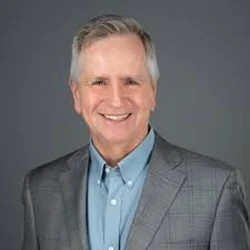
Dr. Michael R. Hicks, President of Anesthesia Services at HCA Healthcare, breaks down the growing challenges in anesthesia, from workforce shortages to rising financial pressures. He explains why “hope is not a strategy” and outlines the need for health systems to rethink how anesthesia resources are allocated. The conversation explores the shift toward non-operating room settings, the importance of system-wide coordination, and how culture, flexibility, and leadership play a critical role in building sustainable anesthesia models.
Welcome to Anesthesia Economics, where healthcare leaders and innovators discuss the industry's most pressing challenges: escalating costs, provider shortages, and the data-driven future of perioperative care. Hosted by Jeff McLaren, CEO of Medaxion, listen in for peer-to-peer conversations that move beyond the status quo to define the next generation of anesthesia leadership.
 Jeff McLaren founded Medaxion in 2008 to maximize information technology opportunities in the anesthesia market. Previously, he served as co-founder and CEO of Safer Sleep, LLC, a provider of anesthesia safety and record automation services in New Zealand and the UK. Jeff began his healthcare technology career as co-founder, President, and Chief Product Officer of HealthStream, Inc.
Subscribe and Listen on Spotify & Apple Podcasts
Watch
Read
Jeff McLaren (00:06):
We're here today with Mike Hicks, who's the President of Anesthesia Services for HCA. And I just heard you talk a minute ago. It was a fantastic discussion that ensued from that. And the title of the talk was Sleepwalking or Wide Awake. And what does that mean to you relative to anesthesia here?
Michael Hicks (00:29):
Yeah, I think that's a great title because there are multiple ways to try to address the issues that we face in anesthesia. And on one extreme is to just keep doing what we're doing, sort of walk around with our eyes closed, hope that we don't bump into things and wish for the best.
Jeff McLaren (00:48):
That somehow cost will drop.
Michael Hicks (00:50):
Yeah. And I believe the reality is going to be just like with sleepwalking, the odds of getting hurt are far higher than the odds of something productive coming out of that walk. On the other hand, eyes wide awake. If we're going to address the problems that are in front of us, first of all, we have to actually acknowledge we have problems. And number two, we have to think very critically about what those problems are and what the solutions are. And so that means owning the reality that we're in, eyes wide open, these are the problems. We have supply demand mismatch. Nothing we can do about that in the short or intermediate term. We have relentless payer pressures downward. Nothing we can do about it. So we have to own the reality. Got to have our eyes wide open.
Jeff McLaren (01:38):
Because with so many of our clients, there seems to be a disconnect between the anesthesia service line and C-suite that just knows that subsidy is skyrocketed. They don't like it. They want it to drop, but yet in many ways, their organizations aren't organized to make that happen.
Michael Hicks (01:57):
Well, I think that's where the battle's going to be won and lost for each facility, quite frankly. Hope is not a strategy. And so to attack this issue, once you recognize that you have a problem and what the nature of the problem is, the way to solve it is essentially the way I frame it up, and as I did during my presentation, you've got to get all of the constituents, all of the consumers of the anesthesia service in a room and have an open dialogue because the anesthesia clinicians at this point in time and for the foreseeable future have to be viewed as a scarce, expensive resource. And we have to allocate them using that kind of framework in mind. And so modern anesthesia practice is not just in an operating room and it's not just in a hospital. It's in non-operating room anesthetizing locations.
(02:50):
It's in ASCs, NORA locations. It's in offices. It's in dental offices. So the demands for anesthesia clinician labor immense. And so one would hope we live in a world where we can increase the supply, but there's really not a lot of opportunity to increase supply the traditional way. Now there's some innovative things going on. I know in my history, I have deployed emergency medicine docs to do sedation in GI labs.
Jeff McLaren (03:22):
Which makes sense.
Michael Hicks (03:23):
Well, when you think about the skillset, can they deliver a full board general anesthetic for a complex cardiac case? No. But just part of their routine day of work as an emergency medicine doc is people come in, need sedation, need airway support, need resuscitation skills potentially. These guys do that stuff day in and day out. Adding this on an elective basis to them makes a lot of sense. Now, having said that, that's playing at the margins. That is not going to address the full bore anesthesia issue that we have in this country. What we need to do is look at the anesthesia ecosystem as a whole. And that means not just optimizing the operating room in terms of block scheduling and when cases start and flip room utilization. Those are things that everyone knows about. We probably don't-
Jeff McLaren (04:19):
That are problems.
Michael Hicks (04:20):
That are problems. But we talk a better game than we actually deliver, quite frankly, on those kinds of things. But increasingly NORA sites, non-operating room anesthetizing locations are important. And in many hospitals, and particularly in my current world, up to 50% or more of the anesthetics are delivered not in an operating room, but in a cath lab or an EP lab.
Jeff McLaren (04:44):
And that's just exploding across the country.
Michael Hicks (04:46):
Yeah. And it's an interesting phenomenon. It's actually a good thing that the cases are moving out of the operating room. What that is a testament to is we have better procedural techniques, things that used to require ... Well, good examples is heart valvular disease. That used to require major operations with critical care stays, extended hospitalizations. We can do a lot of that stuff now percutaneously with much shorter recovery times without the need of a fully fledged operating room for that to be done in. So it's a good thing for patients. And in some cases, it's a lower cost environment, but as that stuff moves out, any other business would say, "Okay, I'm going to move this block of work from point A over to point B and shut down point A or repurpose point A. " But we don't. We just add another site and that just creates increased demand for the anesthesia team, which-
Jeff McLaren (05:50):
You can throw in surgery centers, that's increasing the demand without an increase in supply.
Michael Hicks (05:57):
Surgery centers are an interesting animal. My background is heavily in the surgery center world. And historically, surgery centers were where people like me, meaning aging clinicians, wanted to go. There were no nights, holidays, or weekends. And so yeah, I don't want to take call. I don't want to work on the weekends and holidays. So let me go get a surgery center job. Well, the lifestyle is still appealing, but the economics don't work anymore. And when you layer in that many hospitals in the United States are now paying significant subsidies to support their anesthesia teams, and many surgery centers are just now starting to face that reality. The whole dynamic is changing. In fact, I used to have a joke that anytime I saw two surgeons and a person in a suit talking, they were about to open a surgery center.
Jeff McLaren (06:52):
That makes sense.
Michael Hicks (06:53):
And nowadays with the economics, there are surgery centers that are being forced to close.
(06:59):
If the surgery center had many surgery centers-
Jeff McLaren (07:03):
So the bar is just higher.
Michael Hicks (07:03):
Well, it puts them underwater. And many surgery centers have physician investment. The procedural physicians are part owners of the facility. And if the surgery center is generating, I'll make a number up here, the surgery center is generating a million dollars of profit, but the anesthesia subsidy ask is now a million and a half dollars. That facility is now losing 500,000 a year, much less appealing to the physician investors, the procedural physicians who are the co-owners of it. And in fact, one of the quickest ways to change the dynamic between what historically was a loyal procedural surgeon base for me as an anesthesia clinician is to say, "Jeff, you're the surgeon. I'm the anesthesiologist. I now need you to help pay my salary."
Jeff McLaren (07:58):
That's hard.
Michael Hicks (07:58):
By the form of a reduced distribution. Very quickly, they will still play golf with me, but they will very quickly entertain the idea of finding another anesthesia.
Jeff McLaren (08:09):
But you might have to pay for the round.
Michael Hicks (08:09):
Oh I may have to pay for the round.
(08:12):
Yeah, absolutely. Yeah.
Jeff McLaren (08:15):
Yeah. The ASC space is interesting. How does HCA view that? Is the HCA viewing the surgery center space specifically as that component of the business as an area of growth specifically?
Michael Hicks (08:28):
Well, that's a great question and that is actually best answered by other people from me, but here's kind of a high level view. HCA, from my perspective in the anesthesia service line, is committed to providing care for the communities in which we operate. And part of that care means we provide a appropriate level of care in an ambulatory procedural environment. And so it is heavily in the mix in terms of how we construct our system and our markets.
Jeff McLaren (09:05):
Given your background, I was struck when we started at Medaxion years ago, we were fortunate to have large market dominant practices as clients. And the way they managed their practice and the way they achieved efficiency and scale was by sharing resources across many facilities in a market. And it seems that when hospitals have begun the path of insourcing anesthesia, that they're treating each facility as a labor isolate instead of sharing resources in the market that the efficient practices learned how to do 20 years ago.
Michael Hicks (09:43):
That is an excellent point. And I think it's one that we don't spend enough time talking about on the health system side of the world because it all fits together. It's part of an ecosystem. And so if I focus just on this item and ignore all the other parts of the system, I'm going to get results that were predictable, but unintended that could actually cause more harm than good. And to the point you just raised, one of the secrets, and in my past, I was the part of a couple of large national anesthesia practice management companies, that was part of our secret sauce, if you will. We were able to obtain better payer rates, so that was important. We were able to have more robust rev cycle shops. That was important, but a key way-
Jeff McLaren (10:39):
You guy were really good at all that.
Michael Hicks (10:42):
I like to think that we're very good at that.
Jeff McLaren (10:43):
No, you were.
Michael Hicks (10:44):
And those companies that I'm no longer part of, but help lead are still very good at that. They are industry leading, in my opinion. But what we lose is what we excelled at then, and what some of the larger practices still excel out at is this ability to shift labor dynamically to meet demand in real time. And so-
Jeff McLaren (11:08):
And scale matters.
Michael Hicks (11:09):
Scale does matter. So you have to have scale. It's a predicate for everything else, but then you have to have the right management construct in place so that you can deploy that scarce, expensive resource in a way that makes sense. So you are missing ... I would argue that an anesthesia practice and the health system, more importantly, are missing the mark if they choose to view each facility or each department as a freestanding entity.
Jeff McLaren (11:42):
You have to staff independently with the inefficiencies of all that.
Michael Hicks (11:45):
Correct. You need to be able to dynamically manage the schedule and manage the people that fulfill those scheduling needs, and ideally you're going to do it without ultimately impacting the ultimate customer, which is the procedural physician that is bringing us that volume, because it would be a foolish mistake to save $500,000, for example, on an anesthesia subsidy and watch $4 million of EBITDA or profit leave the building because you have alienated a surgeon or a surgery group. And so this requires ... And this is where the anesthesia folks absolutely need to be aligned with the health system because most anesthesia groups only look at the dynamic and the economics of the anesthesia practice. They don't have that holistic view of the enterprise. And the argument I make frequently is that the only way to solve this problem is you've got to have all of the consumers, all the constituents in a room on a regular basis, comparing notes, who's got high demand on Thursday, who has the ability to maybe shift some cases, who has a relationship with a surgeon where we can call in a favor and say, "Hey, can you move up 30 minutes?"
Jeff McLaren (12:59):
Yeah.
Michael Hicks (13:00):
And it requires a couple of things that are challenging. One of them is we're asking folks to have conversations they've never had before.
Jeff McLaren (13:08):
They're not skilled at potentially.
Michael Hicks (13:10):
Because we've always embraced this idea that every case is a good case, and whenever you want to do it is the right time by me. Well, there's some discussion about whether every case is a good case from an economic standpoint, but the harsh reality economically is that, as I tell people, you can have as much anesthesia coverage as you want, but you're going to pay a lot for it. And so treating the anesthesia service as scarce and expensive, bringing that to the table with this idea that everyone in the facility is in this together, and we have to deploy these people in an intelligent way, I think that is the key success tactic.
Jeff McLaren (13:58):
And so what I'm hearing is you're saying that cohesion is a real strategic asset for the facility to the degree to which you can get the people working together in the room, and especially if you can then elevate that at the system level where that cohesion spreads across multiple facilities where you can actually share resources and a health system then act like some of the large market dominant practices of many years ago where the volume is shifted to the health system.
Michael Hicks (14:29):
Yeah. And I mean, I think that is key, but like everything, there are constraints. And one of the constraints with that model is that the clinical workforce has a multitude of choices now where they choose to practice, how they choose to practice.
Jeff McLaren (14:46):
That's different
Michael Hicks (14:47):
And the current labor force in anesthesia has, yes, compensation's important, but on top of compensation, compensation's needed, but not going to get you all the way there. Conversations around flexible scheduling, meeting their needs are almost as important, maybe just as important.
Jeff McLaren (15:10):
She spoke in the talk about the importance of culture is what you're saying.
Michael Hicks (15:13):
Culture drives everything. And to your point about flexibility, the ability to scale appropriately, they're just a large number of clinicians that don't want to sign up for that. They don't want to be in their car a good chunk of each week driving from this facility to that facility, or Tuesday I'm in the hospital and Thursday I'm in another hospital. So it requires some balance. It's going to require significant leadership. And all of this ties back to the earlier comment, you have to recognize you have a problem, you have to understand what the problem is, and then you have to have your eyes wide open as you come up with solutions that are going to work.
Jeff McLaren (15:57):
Awesome. Mike, thank you so much for spending some time with us today.
Michael Hicks (16:01):
Thank you for having me.
Be Our Guest
Do you have an anesthesia perspective to share? We’re always looking for healthcare leaders to discuss the industry's most pressing challenges. Apply below for a chance to be featured.