

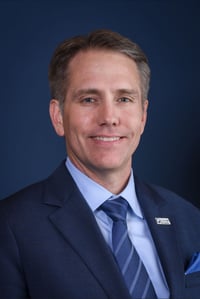
What does it take to recruit, retain, and grow a successful anesthesia practice in today’s market?
Jeff McLaren talks with Chris Thu, M.D. about leadership, culture, provider shortages, hospital relationships, and the evolving economics of anesthesia care.
The conversation explores why transparency, alignment, and operational flexibility matter more than ever for anesthesia organizations nationwide.
Welcome to Anesthesia Economics, where healthcare leaders and innovators discuss the industry's most pressing challenges: escalating costs, provider shortages, and the data-driven future of perioperative care. Hosted by Jeff McLaren, CEO of Medaxion, listen in for peer-to-peer conversations that move beyond the status quo to define the next generation of anesthesia leadership.
 Jeff McLaren founded Medaxion in 2008 to maximize information technology opportunities in the anesthesia market. Previously, he served as co-founder and CEO of Safer Sleep, LLC, a provider of anesthesia safety and record automation services in New Zealand and the UK. Jeff began his healthcare technology career as co-founder, President, and Chief Product Officer of HealthStream, Inc.
Subscribe and Listen on Spotify & Apple Podcasts
Watch
Read
Welcome to another edition of Anesthesia Economics, and I'm very pleased today to have a longtime friend, Chris Thu from Austin. Chris is with a large national practice in their Austin subsidiary. Thank you, Chris, for joining today.
Chris Thu (00:26):
It's my pleasure, Jeff. Thanks for inviting me.
Jeff McLaren (00:29):
So how long have we known each other?
Chris Thu (00:33):
Back to 2014, so 12 years coming up
Jeff McLaren (00:36):
On four years.
Chris Thu (00:36):
Summer of 14 is ... Yep, summer of 14. That's right.
Jeff McLaren (00:40):
I think you're right. Yeah. You guys have a great group in Austin. Thank you. We're seeing across the industry, I'm sure you guys see it in spades in a dynamic city like Austin. A lot of change in the hospital environment, what's being asked of you. If you could encapsulate what you see as the biggest set of changes over the last four to five years, how would you distill that down?
Chris Thu (01:11):
I think the two biggest things are the demand that the hospital is asking of us. Obviously there's operating rooms and if you're fortunate enough to have a hospital that's growing, you're going to have an increasing number of operating rooms. But the biggest thing is the non-operating room sites. Obviously, they've always existed. I think they've over the last five years have really grown to a much greater extent. And at the same time, I think the staffing challenges post- COVID, so five years, four and a half, five years-ish, just the explosion in different offers and things out there for anesthesiologists, CRNAs, care team members. I think that has really put the pinch on practices and hospitals for that matter of trying to staff in a very, very competitive anesthesia marketplace and trying to staff more sites at the same time. And so at least that's what we've seen in Austin here.
(02:07)
And then I know a little bit about my overall company and how it works nationally, and that's what we've seen reflected elsewhere as well.
Jeff McLaren (02:17):
Yeah, I would say the repeat refrain of NORA being a demand driver is extreme. And what we're hearing is that the scheduling dynamics and the variability relative to NORA versus OR cases just compounds the problem. So yeah, there's more demand on the NORA side, but it's also more variable in most environments.
Chris Thu (02:42):
That's right. And I will say also that historically there's been an anesthesia provider or two in each operating room. So that is sort of the natural growth of the operating room environment has always meant that there's on central scheduling for however many ORs you have. The non-operating room environments, our departments, we also call it endoscopy, cath labs, radiology, places like that. They have not historically been in most hospitals, definitely in the ones that I work at, have not been under the same umbrella. And so then now you have, for us, we've got 29 operating rooms that are all sort of staffed for the same central location and the same OR staff and anesthesia and all at the same front board and all of that is a little bit easier. There are definitely challenges when it comes to what hospital wants or what we have. There's no question there.
(03:39)
But then in addition, you've got endoscopy that does their own thing. You've got the cath lab that does their own thing and they don't typically or they're not really usually talking to each other. And so I don't think their intent is to try to stress us and add things on at the last minute, but when they don't have any rules- But they are. ... at least they just ... Yeah, right. And so they definitely are. And so what we struggle with when we talk to a hospital, especially when it comes to the other big mover in my career of almost 20 years, has been a greater reliance on hospital support. So as you're talking to them and say, "Hey, we're happy to cover these things," but you got to corral all the departments and put them under one roof, so to speak. We've had better success at certain hospitals than others and it's really the ones where we've had a relationship or have been talking to administration for a longer period of time that we've had better success.
(04:32)
And it's just an education reeducation as administrators change over of trying to explain our limitations, what stresses us, what strains are our coverage model and what the hospital wants and trying to get those to melt together, which can be a challenge.
Jeff McLaren (04:50):
Do they see the problem? Do they understand the impact of having ... They probably think that, well, the OR schedule is set, what's the problem when really they're not mapping in, but it's more than one schedule because there's the OR schedule, there's the endoscopy schedule, the cath lab schedule, interventional radiology schedule, whatever it might be that's stacking on top without coordination between the silos.
Chris Thu (05:21):
Yeah. I mean, I like to give people the benefit of the doubt. So I hope that they are not doing this intentionally and I don't think they are. I think that everybody has different metrics that they're held to. So if their hospital, the high up administrator is saying, "We're going to judge your quarterly performance based on how many cases you do, " well, then obviously they got to open end there and drop in a case in that room. If that changes to efficiency, which is kind of how we like to push it at least, especially when we have a limited resource that's trying to use people efficiently, that's what we're trying to get people. And then it comes at a certain point, you can be maximally efficient, but that may come at a little bit of cost of surgeon or a proceduralist convenience or if you want to grow, I mean, if the hospital wants to grow and grow cases and bring new surgeons and procedure lists in, then they want to be a little more flexible and that's fine and we realize the long-term play there is good for us as well, but in the short term, we still got to pay our providers.
(06:25)
People still need to make the right compensation. And so there's a give and take there. So I do think they get it. So we may go and say, "Hey, the number of sites that your facility needs on a given day, let's call it 10." And 10 is what you would need, but if they're in a growth mode, they're going to be like, "Okay, well, we know 10 would work, but we really need 12 or 13 to try to attract people in, which we can get. " But then they got to understand that that comes at a cost us. And so if we get people on the right page there, I think to answer your question, I think people do sort of understand that. And then the other problem is, and I'm sure it's true on the anesthesia side, is that you have turnover in the administrators.
(07:03)
And so the administrator, one administrator will leave and then the next person comes in and you feel like you're starting over again. So I've been fortunate enough to be at the same location for my entire career, almost 19 years and it's a education and you get on the same page and then you think this is great and then that person hopefully is going off to do something bigger and better and then you have a new person there and so you sort of feel like you're starting over again, which is okay and we're used to that. And so we're just kind of telling our story and then telling the story again and trying to get people on the same page, or especially if we can get to the state where we're aligning incentives. So we want to grow, hospital wants to grow, we know that there's a cost of growth and we can do that together.
(07:44)
And so a lot of people would talk about hospital support, which a long time ago was really a negative thing, a negative term to say that you're receiving a stipend or support from a hospital. Now I think it's really the reality and we've seen that across the country, but it's not- And surgery
Jeff McLaren (08:02):
Centers too, right?
Chris Thu (08:03):
Oh yeah, not surgery centers as well. And it's not so much that they're supporting you. I mean, actually we have one of my colleagues calls it, this is their advertising budget. So if they want to have another room open, they can bring a surgeon in and at the right time, that's actually they're investing and we can somewhat invest. We don't have the coffers per se that a hospital might, but they can invest a little bit there to then fill that room. And so it's another way to look at it, but just trying to educate people along the way. I never want to be considered a vendor at a hospital. I mean, I understand that I'm not necessarily a hospital employee at any places that I work, but I don't want to be viewed as a vendor. I'd like to be viewed as a partner. And so if you enter into a partnership, there are gives and takes and some of them will be financial, others will be lifestyle or you name it.
(08:58)
And we try to come to an agreement where we can both be happy and both prosper going forward.
Jeff McLaren (09:05):
And I would imagine the administrator turnover, which presents a challenge is true not just in the OR, but whoever's coordinating the various NORA specialty silos. I imagine that that's also a challenge as well.
Chris Thu (09:21):
And to be fair, we have turnover as well. So there's turnover on both sides. And so the job that I do was done by a colleague of mine prior to me doing it and then I'll pass it on at some point as well. So to our extent on our side, just trying to educate people, we try to speak with one voice and we would hope that the hospitals would do the same. It's not always the case. And again, I like to give people the benefit of the doubt. It's usually just because they're new and they're trying to figure things out. And we've been fortunate to have a great hospital partners, plural, but I mean different systems. But I mean, I think again, if you can align incentives and say, "Hey, we're all in this together. We want to grow business, do more cases, serve more patients," all of those things, which are good, good goals to have, that works well and then there's going to be certain pressure points that the hospital has that we need to address and then that we have that we'd like to get some help from a hospital.
Jeff McLaren (10:16):
So do you think that conversations with surgeons and larger surgical groups, especially the ones that are driving volume at hospitals, has that become more challenge? Do they understand the economic pressure that's on the hospital when increased amounts of coverage is provided that's not being filled with cases? I mean, is there more of an understanding there or maybe that continues to be a general
Chris Thu (10:43):
Challenge? Yeah. I mean, for sure on the surgeon side, I mean, historically it was just like they brought a case and this expected anesthesiologist or care team or whoever to be able to do that case. And there were certain times a long time ago when compensation needs weren't what they were now, payer mix may have been better, commercial reimbursements were better and like in the ASCs that you mentioned, I mean there's a day where no ambulatory surgery center needed support. That's definitely changed now. I think there's a lot of reasons for that of payer makes changing in the ASCs and then compensation driving up. And so everyone's getting tweezed.
(11:26)
So I'm probably past mid-career now. I'm 50 years old and I think all the surgeons my age and older, they weren't used to that. So they were still in the old mindset of just bring a case to get covered and everyone's happy. I think that the younger surgeons sort of understand it a little bit more. We've tried to educate not just our administrators over and over again, but our surgical colleagues as well, especially if a NORA proceduralist usually or a cardiologist, if they want a case done, we've explained to them like, "Well, we can't always be available right when you want to be available because it requires a whole other person and what are they going to do the rest of the day and all those things." I think they sort of understand it, but it's education again and again on that front as well.
(12:15)
If you can talk to somebody who actually say owns their own practice, a surgeon or a cardiologist or something and you talk to them and say talk about what overhead is and you speak to them in terms that they can sort of understand versus running an anesthesia department, which they don't really know, they can sort of get that. Would you build another clinic if it was going to sit empty all the time just to see that one extra patient one day a week? They would of course say no. Well, that's kind of the
Jeff McLaren (12:41):
Same
Chris Thu (12:41):
Thing. I mean, it's too a little bit different of a scale, but it's the same concept. Are we going to open up a whole nother room and get a provider here that sits there for eight hours to do one case? That just doesn't make sense. They understand that there. That doesn't mean that they don't want to ask them, they don't want to push for the flip room or whatever. And I get it. I mean, if I were in their choose, I'd stick up for what makes their lives better than I would too, we come to an agreement and say, "We can get to you, but not now in 30 minutes," something like that.
Jeff McLaren (13:09):
What data do you think is the most persuasive with surgeons? Is it the relationship generally or are you showing how a typical week manifests and certain pressure points that are natural during either days of a week or time of day and how they would have a lot more flexibility in the cases they might want to put in if they chose these windows and here's the reasons why. I mean, do you show the whole case board on a week or do you drive into their specific take down of time?
Chris Thu (13:49):
I mean, I think it depends somewhat on the size of the hospital. I mean, specifically, I've been working with a hospital, a smaller hospital right now that has five sites of service a day, so very small, a little bit easier to move some people around. I mean, and then it gets into clinic space and all these things that I don't necessarily have visibility into. So I understand that just because it makes sense for us to swing six cases of various to a different day, it'll ripple effects. But I think if you try to speak to an administrator or a surgeon or an operating director or whatever, try to speak to them in the terms that they understand, which is all going to come down to supply and demand when it comes to manpower and then finances. So my example just previously on building and staffing a whole new clinic for one patient, sort of the same idea.
(14:49)
If you can get to that, they at least understand that. It doesn't mean they're not going to ask for the same thing, but they at least understand that. But if it was an OR director, then you talk about staffing. You talk about, are you going to hire a whole circulator and surgical tech team for one case? And then they say, of course they wouldn't do that. And so if you can do all those things, because if you just say, "I can't hire a CRNA, I can't do this. " They don't understand what that even means. They may not even know
Jeff McLaren (15:15):
What CNA
Chris Thu (15:16):
Is, or they don't understand those things. If you just speak to it in your terms, you're only going to get so far. If you try to just make the analogy, I think that goes a little bit further. And so to get to your answer, you've got different ways to speak to different people. You're all dealing with the same thing. And I mean, having never been in the business world, I can't speak from experience, but it's the same thing. If I was talking about manufacturing widgets and things, you'd speak in the same terms. I mean, obviously people are a little different than raw materials type thing, but it's effectively the same thing. It's a supply demand thing. And I just gave a talk on supply and demand for a anesthesia conference here recently and the basics of supply and demand, if you think back to basic economic class, if something is in short supply, then the price goes up and then typically if the price goes up on something, then somebody will say, "Hey, maybe I should start producing more of those because then I can get more." And then the supply goes up a litle bit, the demand bounces out.
(16:21)
Well, it's a litle bit harder when you're talking about providers because the price goes up and we can only make so many anesthesia clinicians. I mean, we're trying to expand our whole specialty is trying to expand training sites of all different types of anesthesia clinicians. They don't go quickly. And so it's a little bit of economics that you bring in here. And then the anesthesia actual reimbursement part, they used to call it a 33% problem. It's more of a 25% problem based on what Medicare pays compared to a commercial payer, a little bit different than in the surgical world and things. And so trying to just educate people on anesthesia specific problems, but in a way that they can understand that, that's been what we've found to be most successful
Jeff McLaren (17:12):
Yeah, because you mentioned the supply of providers, it's just not keeping up with the rise in demand. I mean, yeah, there is capacity, but it takes years to train a provider and then to expand programs that just doesn't happen overnight. Now you guys, do you employ AAs as well as CRNAs? Are they AAs even an option in Texas? I'm not aware of-
Chris Thu (17:41):
They are not. They are an option legally in Texas. Yeah. Yeah. There's no limitations there. We don't. There's a variety of reasons. I mean, I think in our bigger company, we definitely use AAs across our platforms, but not in my practice specifically in Austin. I don't know that that was necessarily a conscious thing. We've had a much larger pool of CRNAs. We're typically probably at a two to one, two CRNAs for every one MD that we have, roughly is kind of how we have been for almost my entire career. And so that's how we choose to have done here in Austin.
Jeff McLaren (18:22):
Is the pressure more acute in securing new CRNA talent or is it physician talent? Where do you see the pressure?
Chris Thu (18:31):
I mean, I know the numbers and the data. So CRNA demands a little bit higher than anesthesiologist demand currently. And if you look at AAs, they're the smallest group, the highest demand right now. So they're the ones that are growing the fastest, but from a much, much smaller number measured in the single thousands nationwide and obviously growing quickly CRNAs are far and away the most abundant nationally and then NDs and physicians after that. But honestly, it's equally challenging at all times.
Jeff McLaren (19:11):
In Austin, in your group too, it's equally challenging between ...
Chris Thu (19:15):
Between MDs and CRNAs, I think it's probably, I mean, the number of CRNAs we look to hire in a year is always greater than the number of MDs. So just because of that, it seems like
Jeff McLaren (19:25):
We- And a hiring cycle's a hiring cycle. You still have to go through the-
Chris Thu (19:28):
Yeah, that's correct. That's correct. But we look to hire four to eight MDs in a given year and we're probably hiring 20 to 30 CRNAs in a year. And so just based on scale there, it's a little bit harder just to bring in three times a number of people.
Jeff McLaren (19:49):
Now are you pulling in new physicians and CRNAs from other cities? Are you hiring within the market there?
Chris Thu (20:01):
No, the majority of our hires come from elsewhere. So we don't have an actual training program until recently we now have a CRNA program. They don't have any graduates yet. They're a year and a half in, I believe. And so we pull a lot of people from the state of Texas. Obviously it's a very popular state. And so a lot of Dallas, like Houston, some San Antonio, or at least people who are from that area that may go train elsewhere and then come back to Texas. So like I said, we got a lot of Texans that choose from, so to speak, so that gives us a little bit advantage. But compared to when I first started, the majority of people had some sort of tie to Austin, were from Austin, went to school in Austin, had a spouse from Austin. That's kind of who came here.
(20:46)
I mean, we were talking about much smaller numbers. Now we pull from everywhere. So we have people who've never been Texas, never been, but at least are not from Texas. They're trained elsewhere from the Northeast, from the West Coast, from the South. Still, I would say the majority, I would say in the Southern region. So lots of Texas, Louisiana, Oklahoma, a lot of folks there, but we got them from all over now. You have to.
Jeff McLaren (21:12):
Yeah. I would imagine that Austin being a great place to live, high quality of life makes the job easier, that doesn't make it easy.
Chris Thu (21:22):
Yes, correct. I think for the longest time, Austin was a big, big draw. It is a great place to live. There's no question about that. The cost of living has not risen as gradually as some other places. So cost of living is a little bit harder, at least for people to come and stay. And obviously not impossible, but if people are looking to put roots down and they don't have family or something like that, that's a little harder in Austin. But no, I mean, I think overall I also tried to help recruit at some other smaller rural Texas sites and it is much more difficult there than it is in Austin for sure.
Jeff McLaren (22:01):
Yeah. No, I would think that telegraphs across the country too. You guys are on platform in a large national great company, great anesthesia company. How does being a part of that larger organization, does it help or hurt on recruiting specifically?
Chris Thu (22:27):
Yeah, I think overall it's- I
Jeff McLaren (22:31):
Mean, as an attractive vehicle for someone to land, because they would land within that organization, right?
Chris Thu (22:37):
Yeah, I would say on the whole, yes, it's a positive, mainly because it allows us to understand the overall national marketplace for clinicians to a much greater extent at a time when we've had to actually reach out much farther. So before we knew our bread and butter, which like I said, was Texas in the South, but now that we've had to reach out, having more data and my understanding has been great. I mean, I think that some people have historically wanted to work for a small group and obviously we're part of a larger company. And that being said, we still run it as a small group. So all of the decision making and everything for us is all made locally. And so we have what I would say the best of both worlds of the acces to the data and resources of a large company.
(23:30)
But when you come to work here, you feel like you're being involved and you're making decisions here locally, which has been a nice plus.
Jeff McLaren (23:42):
Yeah. Knowing your group, I mean, you guys have, I was always impressed with the cohesion that exists between those in leadership and you've been a part of leadership for a number of years there and what I would call the rank and file members of the team, you guys just have done such a good job of ensuring there's transparency and communication up and down the chain. I could easily see what you say is that, yeah, we're part of a big company, but we do operate like your owners. We're all in this together and we listen and we care about everybody.
Chris Thu (24:23):
That's exactly right. And creating that kind of culture is something that requires a lot of effort ongoing and by no means am I taking credit for the majority of that. Well, it was all preexisting me and I'm just a steward of it now and then I hopefully hand it off to my talented younger partners to keep going for a long time. But I do think that that is important and trying to attract people to any job is obviously relying on multiple factors. Compensation is one for sure work-life balance, but I think also just being involved and feeling like you have a say, you can help make decisions and things. And we try to do that for all of our team members. And some of those are partners who are actually sort of the owners of the business and some of them are employees, but we still want to make sure that they feel like they're part of the team.
(25:18)
And so there may be decisions to make that they may not necessarily be the ones to get to make those decisions, but we certainly want to give them the impact and the input to understand what are the pressure points for whatever facet of our company because the last thing we want to do is make a move, a decision, a change that it ends up being worse off. And so involving people and bringing those people and bringing them into the decision making table as best we can has been something that's been successful for us for a long time.
Jeff McLaren (25:51):
My sense of your group is that it's a high culture group, really in a high culture city, you've got some real advantages in terms of recruiting. So how does being a part of the larger platform help or challenge you in discussions with hospitals? As you have the difficult discussions about subsidy, there's concern that PE backed companies make outsized demands. There have been concerns out of the industry that make outsized demands for subsidy, but in reality, it's the economics of the local platform. I mean, those perceptions might be there, but there's also efficiencies that are driven by large companies too.
Chris Thu (26:39):
Yeah. So yes, that's a great question, Jeff. And I think that the way, and I can only speak to our company, as with anything, there's bad players in any market, that is not us. So the way we do that, like I said, we try to be partners with the hospital or the ASC if we're talking about subsidy negotiations. And it's really just there's a cost to staff in whatever way what they're asking for. And then there's an amount of money that is brought in there and the difference is the level of support and that's what it comes down to. And we can quibble on how much the cost is and what the revenue is and all those things, but it comes down to that gap is what we just need to be made whole. And we're not trying to profit off those things, it's just that we've got to bring the people in and we got to keep them there.
(27:30)
And if we're not going to pay them right, they're not going to stay and then you're not going to be able to cover your hospital. So if you look at the amount of revenue brought in, that is where we've been able to optimize all facets of our billing process. And so it has nothing to do with how much money you may put on a charge sheet. It's just how quickly you can get that in and how efficient you can get that money in. That greatly obviously helps our company, but it also helps our hospital system because if we can shrink that gap, then that stipend is less. And so I think also just when I first started in Austin, we had some smaller stipends than we do now and there were lots and lots of places that had no stipends at all. And there are places that independent groups are still covering now that their stipends are significantly more.
(28:17)
So if you just look over the course of the, like I said, I've been out for 19 years, the amount of stipends that are needed rise for a big company, a small company is just the realities of the anesthesia landscape now. So I think it was really coincidental oftentimes where you've got bigger groups coming together at a time when stipends have gone up. And so yes, sure, coincidentally you might say that that's a causal relationship. I would actually say no, it's not. Because if you look at people that are independent, they're in the same boat. And the reason why we've had as an anesthesia specialty have had to get into bigger groups
(28:58)
Is that we're talking to very big insurance companies that are obviously dwarf us, any of our companies in size. The quality reporting, the IT requirements and things are just very, very difficult to do as a small group. And so unfortunately, you've seen either groups having to coalesce into bigger groups, be employed by a hospital, the true independent group, it's harder and harder. And I think that's been the case in lots of other industries outside of medicine and it's now just coming to medicine and like it or not, that's just kind of where it is. And so the way we did it, we tried to do it in a way that we can still be the best partners to our facilities and still provide a good place to work for our providers.
Jeff McLaren (29:43):
Yeah. I think scale, you hit on it. I think scale really does matter. I think there's a lot of pressure on smaller groups to provide all the facets of organizational endeavor that you mentioned, whether it's IT, quality reporting, just even Q Communicating with the facility, it's a challenge for smaller groups for sure.
Chris Thu (30:03):
Yeah, for sure. Yeah, absolutely.
Jeff McLaren (30:04):
Yeah. And then payer contracting, all of that. I think you guys do a really nice job in terms of revenue cycle function within your organization as well, which is a key driver. So when folks are coming from other places, are they coming primarily from smaller anesthesia practices where they just wanted a change or are they coming from employed environments where the hospital employed them in other cities, or is it a mixed bag?
Chris Thu (30:39):
I mean, speaking just from where I am in Austin, I would still say the majority of our hires are new graduates. So they're coming
Jeff McLaren (30:46):
Out
Chris Thu (30:47):
Entering the workforce for the first time. And that's how I was historically. When I came in, geez, probably the three and four years before me and after my class, we were all new grads coming straight out of residency or fellowship. Over time that we've had people come out of practice and the majority of those are coming from different private practices. Some are some different transfers within our company from other geographies. But like I mentioned for staffing of our CRNAs, we've had to branch out into all facets. Same thing. We just interviewed somebody, matter of fact, from Nashville looking for a job to move to Austin. And so she'd been on practice for five plus years if I can remember. And so obviously you're going to get all types there.
Jeff McLaren (31:36):
Yeah. Wow. Right. Interesting. Yeah. So we talked about efficiency a bit, scale matters. We're a vendor to you guys, MedAction. How does the data and some of the tools that Medaxion provide, how does that aid in your communication with facilities or your drive for efficiency inside your organization?
Chris Thu (32:02):
Yeah. Well, you asked early on about how long we'd known each other. So back in 2014, and this is sort of pre a lot of the data push in anesthesia over the last 10 years, I'd say. We were fortunate enough to have some of my predecessors and leadership here say, "Hey, we really need better data to try to figure out what exactly are we doing, how efficient we are, not efficient, and trying to look for different drivers of hospital performance or anesthesia group performance and try to prove it. You can say one thing, but if you can't prove it, then it's just your word against someone else's." And so we looked around at lots of different vendors, like you mentioned, although I don't like that term, lots of different EMR partners, we'll call it Medaxion was far and away the choice at the time.
(32:55)
We've been very, very happy in our 12 years using that. But basically it allows us to do a couple things. One, like you mentioned on the RCM side, all of the things that we used to do on paper before, charge capture, quality, and then starting the RCM process, that is obviously much better, more efficient, more fine-tuned. And when you talk about actually looking at data on refining that process, we're in much better situation there. And then on the other side, when it comes to the actual running of a hospital or a surgery center and the operational part of that, seeing what certain utilization for an OR is from primetime, from 7am to 3pm or overnight. And so some of those we use for our relationship with our hospital partners or facility partners, so ASCs as well of saying, this is how efficient you are, this is what your turnover time is, this is what your first case on time start is.
(33:53)
I mean, not having that data easily available before was a hindrance. And so now you can generate that in five minutes or you can have it auto generated to show up on your email inbox or your administrator's inbox every week or every month, whatever they want. And so that's important as well. And on the third side, for us at least how we run our practice is very much dependent on what different providers are doing. So what do you do at night? If you're on call, how many cases do you do on average? And so it allows us to sort of figure out exactly what different sites are doing at different times of day. And sorry, my phone is going off here. I'll make it silent. What we do during different times of day is very helpful in keeping that culture up our practice. And so for all those reasons.
Jeff McLaren (34:46):
It's a leveler, isn't it? It's a common language. It helps, I would imagine, and we hear this from other groups with the potential misconceptions of people in one shop versus another, "Oh, we're busier than they are. " You can show them the numbers and disprove that.
Chris Thu (35:04):
That's exactly right. So everybody only remembers their bad call nights or the administrators only remember the time where our room was completely full, but they don't remember the times that don't support their theory. Like you took a call and you did nothing, right? Of course, you don't bring that one up again, or you opened an operating room and there was no cases in that, yet we staffed it and things like that. And so going to them with the data, as long as they can believe the data and say, "Hey, this is where this data came from. This is what we've actually done at your site, or this is where you took call, this is the case that you did for the last quarter."
(35:40)
People can't argue with that. And so not that we're trying to use a Trump card, but data's the data. And so that's the way I think it's the most successful if you want to drive change is to show people what's happening and then make a change make a choice of doing something and then after that you test and say, "Did it make a difference?" And so you iterate that process over and over again to be more efficient or to staff things with fewer people or whatever that is. And without MedAxion, we would not have been able to do that.
Jeff McLaren (36:13):
Well, I would imagine too that having common language with commonly agreed metrics allows you to tamp and manage the emotional response that you said. People remember that bad call night or the really, really busy set of days, knowing that that is an emotional response to those factors and then showing data that levels that out, I imagine that that helps with just culture management, just as you said, you said as much. Yes, that's exactly right. I would imagine you guys have better data than the hospital does about the core metrics of how patients are flowing through the OR. There's a lot of variability on how hospitals measure utilization and what they think is efficient. Sometimes they're not looking at the factors that matter to anesthesia. And so you guys are in there educating them as to this, this and this factor really matters and here's why.
(37:15)
I imagine-
Chris Thu (37:17):
Oh yeah, absolutely. And so we work with hospitals that have different EMRs, not necessarily mean for anesthesia, but for the hospital part of that. And I promise you that data exists in those platforms somewhere, but extracting that data on a routine basis quickly and in a meaningful way is incredibly frustrating. So yeah, you're exactly right. We will go to a hospital meeting and we can easily show data even live time and show data and say, "Here's what's happening in your operating room." And they're just astonished because if they wanted that same set of data, they would ask their IT or their EMR or whatever and they'd be lucky if they got it in a week, whereas we can do it nearly live. And so that's exactly right. And so if you can build the trust with an administrator, I would love them. I always love it when they say, "Hey, can you send me data on X?" First case on time starts or efficiency or whatever.
(38:11)
So
Jeff McLaren (38:11):
They ask you for the data.
Chris Thu (38:12):
Absolutely. Absolutely. Especially like the operating directors, they know like, "Hey, listen, I could go through my processes. It would take me two weeks to get that back and then I don't even know how good the data is, but I can do it in half a day and get it there." And that's the value add part of that. We don't charge for that. We just say, "Hey, these are the cases that we did in your hospital system." So it was our cases, you had a surgeon and a patient in there and you had staff and things. And so we just provide that to them. And so that part is the absolute value add that is great for our hospital partners as well.
Jeff McLaren (38:53):
Well, and you guys are in enough facilities with enough variability that I would imagine that your ability within even just your local platform to normalize and say, "This is a normal set of operating parameters and you guys are outside the norm there." So giving perspective on how a facility might be out of step with staffing and coverage expectation patterns of other facilities, does that help as well? Does that come into it?
Chris Thu (39:22):
Yeah, exactly. And then the other thing that you talked about being part of a larger company nationally, there are definite best practices that we've picked up or we've passed on to other places. And so there might be a new hospital that we're opening and it's going to be six ORs and it's going to have L&D and whatever. We can actually say, "Well, this is how we've staffed this very similar sites, different places around the country that are also new hospitals. We did it in this way." And we can say what we learned, what we didn't learn. And so you can actually, we have actually a tool that actually compares different hospitals across the country that are of similar payer mix or case volumes or sites covered or whatever to try to find their best ways to do things. And of course, every hospital says, "Well, we're special because of X, Y, and Z." Well, that's fine, that's fine, but we can at least come from a starting place and then make change as well, you say you're special or you've got special circumstances because you're going to cover a stroke service.
(40:23)
Great. We can tweak those things in. But again, it all starts with the data. We can say, this is actually how we've run this exact site before or a very similar site, and then we can tweak it from there. But again, it comes back to the data.
Jeff McLaren (40:36):
Yeah, because I think you guys, because the platform is so large that you guys can extrapolate across a large set of very similar ... You can specify down cohorts that actually do match the particular hospital you're going into. In hospitals that do trauma, that do cardiac that might have special service lines. Well, you have other facilities in the platform that do that too.
Chris Thu (41:00):
That's right. Exactly.
Jeff McLaren (41:04):
Well, Chris, thank you for us today and the time today. Appreciate it. Hopefully see you in Charleston last week February. Nate, we're going to do another summit at the end of February next year in Charleston.
Chris Thu (41:24):
Okay. Are you going to be at ASA or anything this fall?
Jeff McLaren (41:28):
We are. We're going to be at ASA for sure and I think a couple of other shows.
Chris Thu (41:34):
Okay, great. I'll be at the ASA. I'm actually, I'm calling you from San Diego right now. Yeah, my folks have a place here, so we're just on vacation, but it's back in San Diego in October and so I'll be here for that. I'm speaking at that.
Jeff McLaren (41:50):
Fantastic.
Chris Thu (41:51):
Good.
Jeff McLaren (41:52):
Awesome. Chris, thank you so much.
Chris Thu (41:53):
Hey, no problem, Jeff. I appreciate the time. It's great catching up.
Jeff McLaren (41:57):
Cheers. Thank
Be Our Guest
Do you have an anesthesia perspective to share? We’re always looking for healthcare leaders to discuss the industry's most pressing challenges. Apply below for a chance to be featured.