

This episode of the Anesthesia Economics Podcast was recorded live at the Anesthesia Economics Summit in Charleston.
As demand for anesthesia services continues to rise, care is expanding far beyond the traditional operating room. From endoscopy suites and interventional radiology to procedural and outpatient settings, health systems are being challenged to deliver safe, efficient anesthesia coverage across a growing range of environments.
In this panel discussion, industry leaders explore how organizations are adapting to this shift by rethinking staffing models, care delivery, and operational strategy to meet demand wherever it occurs.
You’ll hear practical insights on:
- Expanding anesthesia coverage beyond the OR
- Balancing staffing across procedural and non-OR settings
- Managing throughput, scheduling, and resource allocation
- Maintaining quality and consistency across diverse care environments
- The operational and financial implications of distributed anesthesia demand
As anesthesia demand continues to outpace supply, this conversation offers a real-world look at how leading organizations are evolving to keep up.
Panelists:
- Patty Carey, Bon Secours (Moderator)
- Clint Stewart, Self Regional Healthcare
- Tom Wherry, MD, Scope Concepts
- Mark Carithers, MD, Prisma Health
Welcome to Anesthesia Economics, where healthcare leaders and innovators discuss the industry's most pressing challenges: escalating costs, provider shortages, and the data-driven future of perioperative care. Hosted by Jeff McLaren, CEO of Medaxion, listen in for peer-to-peer conversations that move beyond the status quo to define the next generation of anesthesia leadership.
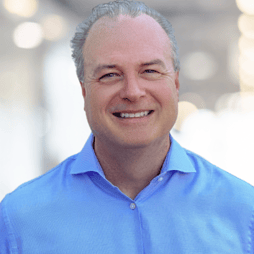 Jeff McLaren founded Medaxion in 2008 to maximize information technology opportunities in the anesthesia market. Previously, he served as co-founder and CEO of Safer Sleep, LLC, a provider of anesthesia safety and record automation services in New Zealand and the UK. Jeff began his healthcare technology career as co-founder, President, and Chief Product Officer of HealthStream, Inc.
Subscribe and Listen on Spotify & Apple Podcasts
Watch
Read
Patty Carey (00:15):
So this really does go hand in hand with what Michael was just talking about with the anesthesia needs. The anesthesia needs are obviously rising throughout the market and it is a finite ride resource of trying to think differently about what we can use instead of using the traditional model. So some things to consider while we're discussing here on the panel is that the percentage of facilities reporting anesthesia staffing shortages has more than doubled from 35% pre-pandemic to 78% today. That's pretty incredible. And then the non-operating room anesthesia, we were talking about this earlier. Volume is projected to grow from 35% to 50% at all hospitals. And then of course, like those ASCs restraints, there's ASCs popping up all over the place. So the ASC leaders now can cite unreliable anesthesia covers as a critical operational constraint. I know for all of the markets in the hospital, between the ASCs and those non-operating room cases, it really does take a toll on our anesthesia coverage.
(01:17):
So we'll go ahead and get started with some of our questions. The first question is, what specific forces have continued to drive the surgeon demand for additional anesthesia services beyond the pandemic recovery? So if one of our panelists here wants to cover that one.
Mark Carithers, MD (01:37):
Yeah. So we kind of talked about this earlier this morning. So the neurospace is obviously, at least in my health system, a very demanding area. We continue to grow, as everyone knows, in GI, EP, you name it, all the stuff specials, MRI, CT. And the problem is, is what Mike alluded to, it's not always very well managed on efficiency for the anesthesia team. And we all know what NORA stands for, but I've always said it stands for non-organized random anesthesia. It doesn't stand for what we normally say it is because it's very complicated. And again, in our system, if we tell the proceduralist or the surgeon that we are not available, then they immediately run to administration and says, "Anesthesia can't service my cases." And then anesthesia then is in hot water. So it's an ongoing struggle just because staffing is short in just about every hospital that I know.
(02:43):
I cover the upstate Midlands and East Tennessee as the chair. And nowhere are we fully staffed, and that's from CRNA anesthetists, AAs, and anesthesiologists. It's a staffing struggle, but then we have the NOR continual growth that even if we're staffed at one point, we become understaffed just because of the growth that comes to us every single year.
Patty Carey (03:06):
That is a great point. Thank you.
Tom Wherry, MD (03:12):
NORA is like this ... When I was back in the '90s, NORA was like this annoying sister-in-law that would show up every once or twice a month. And now NORA is this thing that shows up every day, shows up late, doesn't end on time, wants what they want when they want it. And hospitals have not figured it out. They've figured out ORs. They have leadership committees and surgeon committees and block utilization. I think for the most part, most ORs structure themselves very disciplined, but the growth of the NORA, which is really just the addiction to propofol and needing that propofol to ... I mean, heck, when we did GI back in days, first that we weren't even involved until you heard a patient scream, then you would come in and give us a propofol and move on. And so there is this growth and this need for propofol sedation that has not been organized at all.
(04:10):
And the procedurals do not understand. Most of them are internists, cardiologists, radiologists, and they never grew up in a surgical environment. They do not have the discipline of surgeons and they don't have OR committees accountable. And it just becomes this anesthesia on demand model or just chasing our tail. And that is probably the number one contributor. I think the second is hospitals do compete with each other. I work in several markets where they'll add ASC. So if you're a 10 OR facility and you add five ORs, now you're asking the anesthesia team to cover 15 rooms, but there's no increase in volume. So you're just diluting the volume over ORs. And I would say those are probably the two biggest contributors I've seen.
Mark Carithers, MD (04:53):
Yeah. So we live in the epic world as far as the EMR and optime is one thing which goes through the ORs, but when you step outside the north space, they're in Cupid, they're in radiant and they're ... You can't measure either on time starts utilization because there's no block time that exists in those areas. It's just, we just put cases and we do them. We don't know how much turnover time is between cases. We don't know if they start on time. We have subjective ideas of what it looks like. But when we go to administration to tell them how inefficient that space is, it's hard. We don't have really any great metrics to make that happen because they're not in op time and there's no block times in the schedule. I mean, you can kind of cure it to a certain degree. If you just built four blocks and from 7:30 to five, whatever you want to build them, and then you put it back on the procedure list to post into those blocks and then you could put four anesthetists and you could put one anesthesiologist to do medical direction and you could control the space.
(05:54):
But the problem is, is when you go on to do that, the proceduralists do not want to do it because it disrupts, they say it disrupts their schedule. And I think back to Mike's point at some point, it may flip that the cost for doing anesthesia and how we do it now, as opposed to building blocks in the Noro space, it may be more costly when you don't do it that way. So I mean, there's huge opportunity from my standpoint in the north space to get metrics around it, get some organization around it. And right now it's, to a certain degree, at least my experience, is a little bit of free for all.
Tom Wherry, MD (06:27):
It is. We looked at data at a facility that shall go named where we looked at heart transplants versus CATs and for anesthesia ready to cut on a transplant it's like 20 minutes, 45 minutes to an hour and a half, anesthesia ready till that cardiologists get started because they wander off, they come back, they show up and there's zero accountability in that space and that's probably the number one problem. You agree?
Patty Carey (06:53):
Yeah. One of the things that we're doing at some of our hospitals in the Richmond market is we are, to kind of echo off of what you all were saying, is we're having our surgery scheduling team take over all of the anesthesia scheduling and with those EP lab cases and the cath lab cases, we're giving them blog time. I just had a fun meeting yesterday with that service line lead, just to let them know that the way we manage the OR with OR utilization, prime time utilization, FCATs, we're going to start managing the EP lab and cath lab very similar. So we can pull that data. Now they do document and other things outside of Epic like we do, but if we have our surgery scheduling team at least scheduling those cases, we're able to monitor that a little bit more and get some more data because right now it's like that black hole.
(07:39):
We don't really have the data that we need to help support it.
Clint Stewart (07:44):
So good morning. I'm the non-clinician non-operator on this panel, CFO at Self Regional. What you've described with NORA often comes to the C-suites. We've got the grand idea of increasing procedural volume, whether that's a GI lab, an ambulatory surgery center, the rising demand of heart procedures, CAF, EP. What we don't have an appreciation for is how we're going to staff it. And oftentimes that's the limiting factor that the C-suite wants it to occur. We know that there's margin there, but we don't have a solution and we don't really have full line of sight of the efficiency or lack of efficiency in order to accomplish that. So I appreciate all of those comments and echo the concern we have.
Patty Carey (08:44):
So let's talk a little bit about ASCs. Are ASCs destined to follow the path of hospitals in terms of their reliance on facilities subsidies to maintain coverage when it comes to anesthesia?
Mark Carithers, MD (08:58):
So I had to get a little bit of clarification on facilities, which means hospitals are basically our hospitals at some point, ASCs, can they be freestanding without financial support from hospitals because as the current thought process on ASCs, and we're just starting this at Prisma into the ASC market, and some of you may have been in this market for a long time, but it's a very ... I think in the long run, they do not stand alone. I think they do will have to have financial support from hospitals. The issue is, it's supposed to be more cases. The facility fees are much reduced in ASC. So basically what you're trying to do is cut overhead and cost to run these centers. Cost your facility fees are greatly reduced, so you got to cut costs. Well, you can cut cost in materials, you can cut cost a little bit on the staffing far as the nursing side.
(09:58):
You can't cut out the proceduralist, you can't cut out the surgeon. So the only people left is the anesthesia team, and we're the most expensive there probably minus the surgeon. And so then they look at how can we manage the anesthesia cost? And depending on how your surgeons are arranged, if they're employed or they're private, these joint ventures want them to buy in, but from an employed surgeon standpoint, they say, "What's the point?" I mean, it only gives me risk to buy in. So when they come to them to cut cost, they focus anesthesia and say, "Well, what can do is we can get rid of the anesthesiologist and just have the anesthetist work under you as the surgeon and then you sign the record for basically coverage of the anesthetic." And they're like, "No, no, we're not going to do that because what's it for me? I'm an employed surgeon. Why would I take that risk?" So then it comes back to the anesthesiologist and we're expensive and the fact of the matter is, and that's where the cost becomes a problem. And so then if they're like, "Well, we'll just go outside and we'll find somebody to do it for less." Well, the problem is, is that there's so much work to be done in hospitals with great compensation is that the people who will go into the ASCs are very difficult to find because the reimbursement that you're going to make in compensation is less than what you can just go work into the hospital for. So it's a very complicated problem that I'm just starting to try to manage and it is difficult to be honest.
Clint Stewart (11:31):
Mark, if I could follow up, how do you see that equity ownership that the physician surgeon has as being a major driver for the risk avoidance that you described there? It seems like there's a little bit of a carrot stick for them to drive that in an ASC environment.
Mark Carithers, MD (11:48):
Yeah. If I understand, so you're saying how do you get the surgeon involved or engaged?
Clint Stewart (11:53):
I think the surgeon may be more likely to incur some additional risk because they have equity ownership.
Mark Carithers, MD (12:00):
Yeah, yeah. And that is, but they see it as they have no guarantees that they're going to be on the net positive on that. And they're like, "Why do I need to take on that risk?" But yeah, that's the thing is I think when they get into these, they're not sure they have enough control besides just volume of cases. They're not sure they truly have enough control on the cost containment to be successful. And I mean, I've talked to a lot of them because they're like, "No, we're not going to do it. " But the premise on most of the ASCs is, yeah, you get the surgeons to buy into it to have some financial something at stake.
Clint Stewart (12:33):
They don't see a risk reward that's favorable. They do not.
Tom Wherry, MD (12:38):
And I would say short answer, yes, I don't see it. Actually, on the flip side, I saw this 20 years ago when I was working for a surgery center management company and I traveled across the country and the hospital based groups were getting subsidies and they weren't getting them at their surgery center. And the subsidies allow them to cover at the hospital, empty rooms, easier days. So the script flipped where ASEs were more demanding, they were more at risk. And so what ASCs would want to found mobile anesthesia groups or something to figure it out and then the hospital subsidies just went up because they lost greater payer mix. So I think hospitals by paying these very massive subsidies have sort of stripped the anesthesiologists of incentives to go and be hungry and go out to these ASCs. So the hospitals will always win the manpower war because they have the pockets to provide the subsidies to meet the salary demands.
(13:32):
These ASCs have very short margins and they cannot make it work. And the second thing is the higher acuity that's occurring in ASCs. There used to be you do 10, 15 ear tubes and make bank and now they're doing total knees and total hips and three hour spine cases. So you're not getting as many units if you look at the base plus time or they want flip rooms. So we were dealing with an ASC that we're finally having to hit a subsidy with and the surgeons asking for subsidies like, "Oh, we're giving you five total knees in two rooms and we'll do the math." And this is a CRNA only practice. You cannot make the numbers work with five Medicare total needs and pay the CRNAs. It's not going to work. The math doesn't add up. So you just have to sit down with them and show the math, but I don't see it going away as these growth of ASCs occur.
(14:24):
The hospitals will always win it, but the ASCs are going to suffer.
Patty Carey (14:29):
Yeah. The complexities definitely do arise even more greatly with the addition of the more ASCs and with the anesthesia cases outside of the OR. So the next thing that we need to talk about a little bit is technology. Technology, AI. How does that really impact our life when it comes to healthcare and anesthesia? What role will emergent technologies such as AI play in mitigating the current provider supply demand imbalances? Can we utilize AI differently than what we are now?
Clint Stewart (14:59):
Let me jump in and give the non-clinician AI perspective. As I sit on a lot of discussion groups with finance, rev cycle, CFO types, we are bombarded with the number of AI tools that are out there. We struggle with identifying which one we need to, as the same goes, put our cart ... Yes, yes, and attached to that wagon, so to speak. And so we're in an environment where it's information overload, and so it's almost paralysis analysis. And I've even had my CIO say, the time it takes us to get to a decision, think 60 to 90 days, and that's quick, the technology has already changed. So I think we really are in a unique period of time to try to identify what to do and how to do it, but we really need help. And again, that's a very generic statement, but when you're seeing the things that are out there in the public domain about what's coming, not only for administrative white collar jobs, it also gets very much into the clinical world of what does healthcare look like, how does AI change the delivery of healthcare, even from a clinician's perspective.
(16:24):
So with that, I'll hand it over to the doctors.
Mark Carithers, MD (16:27):
I'm going to excuse myself from the question because I'm too old to answer any question about AI. Seriously, I have no idea how it affects anesthesia. I'll just make that very clear. But I do hear in our chair meetings for internal medicine primary care folks on how great this tool is for them generating notes and things like that. The only thing we have at our shop in the EMR is that there is a generative AI that would actually summarize the patient's history when you pull it up, which is super helpful because it can tell you the surgeries they've had and medications and all these things and the prior anesthetics. And it's actually pretty nice, but that doesn't replace providers. It doesn't really make you much more efficient. It's actually just a helpful tool. I don't really know the answer to this question. We provide an anesthetic and when we do someone, at least at this point, someone has to be there and I'm not sure how we ... I don't know in the future what that looks like.
(17:28):
I'm pretty sure I won't be in business when that happens, if it ever happens.
Tom Wherry, MD (17:32):
I would say you manage a lot of providers, and as do I. And it feels like you spend most of your time as the pastor, marriage counselor, social worker, and you first spend ... It's really about that culture and personal touch, and they have all this anxiety, and there's all this stuff out there. What's nice with AI, be more simplistic data, however you get that data and it's reliable, is after they've spilled all this anxiety that the system's doing this, or this surgeon's doing that, or the CRNAs are doing that, or the anesthesiologists are doing that, is actually have a thoughtful conversation afterwards with really real time data, not data that's six months old or three months old, because there'll always be excuses, but it's super helpful. Because otherwise in those sessions, when you listen to them, you just act on emotion. I think that's what a lot of people get in trouble is they react on emotion.
(18:33):
"Okay, we'll hire another person or we'll do that. "And then we get into these financial binds. So the data is super helpful. How AI will affect it's unclear and predictive analytics and what really is going to happen, I'm with you on that, but I do think the data is hugely helpful, but you can't discount just the relationships and then use that data to
(18:59):
Prop up those relationships and educate them on the reality.
Clint Stewart (19:03):
Sounds like you're describing an illumination of objective data more real time, but not really a change of the way medicine is practiced. Correct.
Patty Carey (19:15):
So let's get back to the anesthesia needs outside of the OR. So as we continue to expand those anesthesia services outside of the OR, other than traditional OR volumes, how much the anesthesia business model evolve to remain viable? As we've said before, our anesthesia supply outside of the OR has increased greatly. When we were talking earlier, Dr. Carthurs had shared with me that he has 40% of your cases, 40% of your sites are outside of the OR. Yeah,
Mark Carithers, MD (19:46):
In our main hospital, close to 40%.
Patty Carey (19:48):
Yeah. So if we could talk a little bit about that and how you feel like the model may look differently in the future.
Tom Wherry, MD (19:56):
Well, what was mentioned earlier, which is I do question sometimes why there's an anesthesiologist or a CRNA in certain cases. I think it's just been historic. It's evolved over time. I remember I was in a fee for service model, so you want every case, you want to do everything. And then this new world we live in, as you're managing a practice, you're like, " Why are we covering these categories? "It makes zero sense. I think I was in a hospital in Anchorage, which I didn't realize in Alaska, nurses are allowed to deliver propofol under a GI doc. And I walked in and there's a propofol drip going and there's a nurse monitoring the patient, yikes, but that is something we have to look at is what is reality. The other is, like I said earlier, GI, they used to do dumb wrong and first not around. But also I know at children's hospitals, there's a big need for ped sedation. And I know one facility that we're seriously looking at leveraging the ICU docs who are the PICU docs that are available and using them for ped sedation. We don't need a CRNA or a doc. As long as they're properly trained and there's proper quality metrics and they do all the standard monitoring, it's really like 20 or 30 ccs of propofol. There's no reason to stretch us this far. It's just got completely out of control. So I think looking at cases and can other providers provide that sedation in an organized way makes total sense.
Clint Stewart (21:26):
Well, I was just going to say when the CFO hears the clinician, physician say that, what does the CFO think? It's like, go do it. Go implement it, go become efficient. Maybe weave into your answer, that C-suite perspective, that CFO perspective, and then how you manifest that into action.
Tom Wherry, MD (21:52):
You got to get cooperative because the hospitals resist, the ophthalmologists resist. You have to get back from the hospital to meet with those surgeons or meet with the nurses because you'll have to have a few more nurses available, sedation nurses, there's training involved, but I know the providers, the anesthesiologists I work with are fine. Let them have that, but it's got to be done right and safe.
Clint Stewart (22:13):
Is there a medical staff conversation that also needs to occur?
Tom Wherry, MD (22:17):
Yes. There's a lot of rules and regulation. So you have to change some bylaws sometimes.
Mark Carithers, MD (22:23):
Yeah. So we use ... Our PICU attendings do the pediatric sedations for a lot of MRI stuff and it's worked well for years. There's still plenty of work for us to do so we're not like heard over the fact that they're doing them and that they do it well. So they give us the difficult ones. If the patient has lots of comorbidities or size and they don't feel comfortable, they'll send it to us, but they do a lot of those.
(22:46):
But the real question also on, you could go to the staffing model that you have and then we work under a medical direction everywhere except in East Tennessee. It is a supervision model. But then the question comes, do you have a medical direction in certain areas and supervision in other areas? It's a very contentious fight. Sometimes amongst the anesthesiologists, they think if they open that door to supervision, then everything's going to go to supervision. And everybody can have a perspective on what they believe is the right mode of delivery and it's really kind of organizational and department dependent. But I always beg the question, so if you have a five room outpatient GI suite and you're under medical direction by those rules, you got to send two anesthesiologists to cover five rooms. And all of a sudden you got one anesthesiologist either personally performing a GI room or they split up the five rooms and have three and two and that's crazy too.
(23:44):
But then the only other model obviously is supervision, which is probably the most financially responsible. But then I battle to my physicians to say, how about we do that? And they're like, they want to throw me out of the room. We're not going to do that because we believe that's just going to open the door for a further supervision model and they don't want that idea. But we have to, I have to for ... I have 500 folks. We got about 350 plus CRNAs, AAs, and 125 or so anesthesiologists. And so it's a big crowd. And what I can do is create a competition on how we do this. So it's a very tough navigation from my standpoint, but from a financial standpoint, if I have room ASC of any type, especially GI, it's a supervision model. But like I said, if any of my folks were in here, they'd throw something at me.
(24:32):
But that's how I see it, but it's a tough battle. But I think even in the Nora space in the hospital, there's some potential for that as well.
Patty Carey (24:41):
That's interesting. I hadn't thought about utilizing the pediatric intensivist to do some of that. So I like that. I think a little bit differently. So we've talked a lot about the hospitals and the NORA. How are the anesthesia groups and hospital systems ... Sorry. As NORA expands fashion than the traditional OR volumes, how must the anesthesia business model evolve to remain viable? I know we have our CRNAs and we obviously have our MDs. Are there any other models that we could look at differently to become more viable?
Clint Stewart (25:17):
Well, they're thinking the CFO perspective, we all know that the headwinds that are coming, some are already here, the one big, beautiful bill mostly impacting in a big way in 28, but already occurring that the health exchange issues that are going to occur this year from the C-suite, the CFO, the headwinds are just numerous. And so when we see anesthesia, the business of anesthesia, it's one big factor that we're pushing for efficiency and optimization. The pick list is voluminous to become efficient in providing care, and again, the business of healthcare, but we see it as an area that has to be dealt with, not to sugarcoat it, but it has to be dealt with because it's a big opportunity, and I think that's across the board pretty systemic in the industry. I gave you time.
Mark Carithers, MD (26:28):
So I think back to kind of Mike's talk there is that efficiency is obviously a thing that we have to have because we are expensive as a team. And I believe that's a new thought process is that we always say yes. I tell our folks that we always say yes. We show up, we do the case, we show up, we don't say no. And that puts us in a very inefficient model a lot of times. And I think to Mike's point is that I think it's administration, I have to engage them and I think that's a new path, not that we don't, but just a new thought process of, is there a possibility to tell proceduralists, no, you can't do it this way and you're going to have to do it at this time because of the inefficiencies that this produces. So I think it's a grand idea.
(27:13):
I don't know if I'm successful at it or not, but at least it's a thought process to at least start that conversation. And each year, budget grows, we miss budget every year because growth of anesthesia during that budget year always grows. I mean, we just more cases, more anesthesia minutes, ours was up the first quarter of 500,000 minutes in a single quarter for our system. I mean, that's just continued growth that was unplanned from the year before. I mean, because the budget didn't have that in there. And when we do anesthesia minutes, somebody's doing that case and they're either doing it within their contract that's already paid for or it's going to be overtime PRN, flexible pay, which is at a premium cost. And so it's always hard, at least from my standpoint, in charge of like not only the chair, but executive medical director for anesthesia services, and I'm in charge of the financial piece too.
(28:05):
And it always grinds my gears because I feel like I have not total control over a lot of these things that cost us money for coverage. And it's a very complicated conversation when we tell someone, "We're not going to cover your case." That answer doesn't go well.
Tom Wherry, MD (28:23):
I mean, I don't think there's a perfect model, to be fair. I think it's more about how that model's implemented, so to speak, because if you could have a lot of hospitals have gone to employment, or there's large national groups, or there's small local groups, they all have their challenges. How do you take, from where I practiced back in the day, we were super motivated, we were hungry, we would call surgeons to come early, "Can you do this? Can you do that? " So now you have a generation of employee, either employed by a national group or they're employed by a hospital, the motivations are not completely aligned. So it really comes down to leadership, creating a culture where people are willing to work at a place that they're taking care of, that the hours are reasonable, that they have a say in their schedule, that it's flexible, but the hospital needs to partner with these groups because they demand more and more, and then the groups and even the employed physicians feel defeated and not valued, so to speak, even though they're paid five times what I made in 90s, but they're not feeling valued because they don't have a say in the role, how OR is run and the control of it.
(29:36):
So I think the secret is not the model, but getting back to anesthesia engagement you're spending Ritz-Carlton prices, you might as well get a service that's actually delivering and running the OR and being engaged and give them the bandwidth to start making tough decisions and being at the table versus just utilizing them as a ... You treat them transactions Factionally, they're going to have be transactional. But if you treat them as partners, whether they're employed or from wherever the landscape is, treat them as partners and have a seat at the table, work with the data and work with how you can make things more efficient. Exactly what I heard from each day, which I thought was brilliant is bring them to the table, but the nurse needs to be there. The facility exec says they're all competing against each other. It just feels like everyone's pointing their fingers at anesthesia right now, but they have the answers and solutions.
(30:28):
You just got to let them have a seat at the table. Is that fair?
Mark Carithers, MD (30:32):
That's fair.
Patty Carey (30:35):
So I really do want to open it up for questions from the audience. So if you guys have any questions, please raise your hand and we can bring a microphone around so that you guys can ask questions.
Audience Member 1 (30:50):
I saw his hand first.
Audience Member 2 (30:53):
One of the questions we get a lot as a revenue cycle management company is why not just QZ these endo rooms and the cataract rooms? Do you guys have any opinion on that? I'd like to hear it if you do.
Clint Stewart (31:12):
I know if I were to say that in front of our ologists, they would give me the lecture of quality and really push hard back on that concept. I think there's the concept that the BUCAs are not paying 100% of QZ, certainly that's an issue in that world. But for those organizations that have went to that model and can get paid, from the CFO's perspective, it seems like a really good thing. But I think in reality, it's much more challenging.
Mark Carithers, MD (31:47):
So Bell, I kind of live in a divided house. So the Tennessee market that I cover at Blount Memorial, it is just under supervision. I think the CRNAs, they build a QZ modifier with that. And this is in Tennessee, so they have some different rules. And so in Tennessee, you cannot employ like anesthesiologists, pathologists, hospitalists, you can't employ those groups. So this is a private group and I have limited to control on how I operationally manage that OR just from constraints on employment from the anesthesiologist. So we do that, but everywhere else that I have is under a medical direction model that so we build it differently.
Tom Wherry, MD (32:30):
I mean, I'd have to know more why you're going to QZ. Is it true CRNA only? Yeah. Versus there's a lot of groups and we did this in Maryland because the seven steps of medical direction can be onerous. So to the point of four starts starting at 7:00 AM, you're going to pick as a clinician, the higher acuity cases. And it does seem silly to be fair when you're doing medical direction and you walk in to watch a CRNA, put an LMA in. Well, I've got some sick ass patient two doors down that I need to be at. Oh no, let me stop and run over here and watch this so I can meet medical direction. So some of the problems with medical direction guidelines. We in Maryland, when I was with that group, decided to do QZ, there was no financial difference. So there was no penalty to go QZ.
(33:20):
And we still was medical direction light. We still kept ratios one to three, one to four. Sometimes one to one if it was a really big cardiac case. It takes two set of hands. But we don't ... The problem is billing is driven and medical direction is not a clinical term. It's a billing term. A lot of us get fixated on medical direction, but it's not anything to do with medicine. It's really about how you most safely take care of patients in that particular environment. So I would just caution because it is very political too. I mean, the ASA is totally against QZ billing, even in a medical direction model, but some groups do it just because they just don't want an audit and they're not always meeting the seven steps.
Patty Carey (34:05):
Great question. We have another one over here.
Audience Member 3 (34:08):
Okay. Yeah. So a metric we used to always use was the investment per location, right? Your total subsidy valued by the number of operating rooms you run on any given day. I haven't seen any benchmark data on that or read any articles or heard of that mention. And I don't know if you guys have any firsthand knowledge of what national trends have been relative to the investment per location.
Tom Wherry, MD (34:35):
My data's probably data. It used to be about 120,000 per OR. It's probably ... I think to the point earlier, I've seen over 80% of the budgets being subsidized. So you can look at per OR. I think a better measure is coverage minutes. That blinds it. You can't use units because ASA units, it's not right, but if you look at anesthesia minutes and how much you're subsidizing per anesthesia minute, if you're a big system with 10 hospitals, you can compare the different hospitals and blinded to payer, just purely just cost of the service, nothing with revenue. It's purely the cost of the CRNAs and the docs and the AAs at this facility versus this facility, how much is the cost per anesthesia minute? I don't have a benchmark for that, but that's to me the easiest and cleanest measure. But it used to be per OR.
(35:23):
It used to be around 120. I'm sure it's double and triple.
Clint Stewart (35:28):
Yeah. I recently saw a consultant's report that suggested it was 300,000 per esing location and then loss per case was trending north of 150, 150 dollars per case.
Mark Carithers, MD (35:43):
We just look at cost per anesthesia minute. We don't look at the coverage site.
Patty Carey (35:48):
Yeah, we do the same thing, the cost per minute. Any other questions from the audience? Yeah, we have one more. Type for one more. Yeah.
Audience Member 4 (35:55):
More question and comment. I actually have really robust data around all of those things and I can't share it, but I will tell you that you are directionally correct, but probably not high enough in terms of what the cost is. And then the other thing I would say about that comment earlier, a conversation you guys had earlier is that your best chance of success is to actively manage the schedule. And that means both OR and NORA sites, and the NORA sites, I probably should have made a bigger deal of this. It's the wild, wild west. Those guys running neurosites have never had any anesthesia constraint ever placed on them. So when I suggest active management, where I've seen it done the best, that means literally a daily anesthesia huddle with the head of anesthesia, the OR director, all the NORA sites, the COO or someone equivalent who owns the hospital, they meet every day in a room and they look at the schedule for that day, the next day, five days out, and active management means they pick up the phone and either call or text and say, "I need you to move up, or can you move back 30 minutes," or something of that nature.
(37:19):
It sounds labor intensive, but if you're using a $300,000 per room metric as a subsidy level, it's not that much money to bring those people together. And if you can cut one site a service, there's 300 grand. You cut three of them, you're a million dollars. The numbers add up quickly.
Patty Carey (37:40):
Thank you. I want to thank the panelists for being part of the conversation this morning.
Be Our Guest
Do you have an anesthesia perspective to share? We’re always looking for healthcare leaders to discuss the industry's most pressing challenges. Apply below for a chance to be featured.