

As anesthesia groups and health systems face ongoing staffing shortages, rising costs, and increasing operational complexity, traditional staffing models are no longer enough.
In this panel discussion, industry leaders break down what’s actually working today, from flexible locum tenens strategies to hybrid employment models, and discuss how organizations are balancing cost, culture, and continuity of care.
You’ll hear practical insights on:
- Aligning providers across employed and contracted models
- Reducing turnover and improving retention
- Navigating compensation pressure and workforce shortages
- Using data to drive smarter staffing and operational decisions
Whether you're leading an anesthesia group, managing perioperative services, or navigating staffing challenges at the health system level, this conversation offers a grounded look at how to build more sustainable, high-performing teams.
Panelists:
- David Donnelly, Trinity Health Advisors (Moderator)
- Stephen Porter, Piedmont Healthcare
- Todd Horowitz, DO, Hospital Staffing Partners
- Spencer Lilly, Medaxion
Welcome to Anesthesia Economics, where healthcare leaders and innovators discuss the industry's most pressing challenges: escalating costs, provider shortages, and the data-driven future of perioperative care. Hosted by Jeff McLaren, CEO of Medaxion, listen in for peer-to-peer conversations that move beyond the status quo to define the next generation of anesthesia leadership.
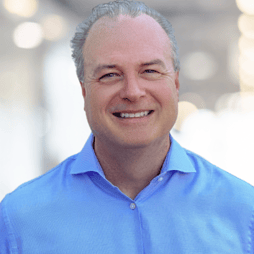 Jeff McLaren founded Medaxion in 2008 to maximize information technology opportunities in the anesthesia market. Previously, he served as co-founder and CEO of Safer Sleep, LLC, a provider of anesthesia safety and record automation services in New Zealand and the UK. Jeff began his healthcare technology career as co-founder, President, and Chief Product Officer of HealthStream, Inc.
Subscribe and Listen on Spotify & Apple Podcasts
Watch
Read
David Donnelly (00:05):
So I want to introduce our panel discussion talking about successful anesthesia, staffing strategies. Joining us is Dr. Todd Horowitz, who's the main director of hospital staffing partners, a board certified anesthesiologist, more than 20 years of experience in clinical leadership. And he's bringing today on our panel of deep expertise and anesthesia staffing trends and practices, as well as practice management. He's joined by Spencer Lilly, a strategic healthcare advisor with Medaxion, former hospital leader. He advises healthcare organizations on strategic alignment, operational, performance, and then physician enterprise development. So we'll pick on his experience. And then lastly, at our end is Stephen Porter, the corporate senior VP and CEO of the Piedmont Fayetteville Hospital in the Atlanta market. And Stephen leads the operational excellence, physician alignment and hospital growth strategy there. And so I wanted to start with Todd. It was brought up that a lot of the physicians and APPs are interested in flexibility.
(01:26):
Post COVID, many people looked at the models that are available with locums. When you have people speaking about opportunities within your organization, what is it that appeals to them from something other than a W2 position?
Todd Horowitz, DO (01:43):
Sure. So Dr. Hicks hit on it earlier this morning. He called it the number two most important thing, which was the flexibility in scheduling. And I would argue it's maybe even a number one tied for number one at least. What we see all the time, I get probably 20 calls a week from physicians, CRNAs, CAAs, all contemplating whether they're going to make this switch to locums to the 1099 lifestyle. And I'm brutally honest and I tell them it's not for everybody. We have an honest discussion about what they're looking for because I think many people feel like if they go into locums, they're going to be instant millionaires and it's going to be amazing. And that's of course not the reality. But when you dig down, I find often they're dissatisfied with their sites they're at currently for many of the reasons that we've already outlined.
(02:42):
They don't have buy-in, they don't have support. Maybe their pay structure isn't great. Maybe their time off isn't adequate. So often people are willing to transition to the locums life, if you would, because they will have control of their lifestyle and of their schedule. And I was speaking earlier about this 26 week job trend, which I think is super important right now. It's catching fire and as a locums agency, we're actually capitalizing on that because so many people are moving to work hard for 26 weeks. Then they'll come and call us and work steadily every month for another week of locums each month and then keep a week for themselves. And when they do that, they're making more money than they would in their W2 job. They still have their benefits. So it's about creative scheduling and I think that trend is only going to get bigger and bigger.
(03:42):
I find that the locums life, it's kind of taken on a life of its own. It's not for everyone. We don't tell everyone to do it. I think it was like, oh, as the locums person on the panel, you can almost be vilified because we're doing a job that some people would argue is expensive and not great for the industry, but we're filling this necessary void. And I can tell you at least with our company, we're doing so with transparency and honesty, which is all that we can offer, is try to be better than the rest outlet.
David Donnelly (04:20):
Thank you. Steve, I wanted to go to you. Piedmont consolidated its anesthesia took accountability in the source. When it came up with staffing strategies, you wound up having a number of different options.
Stephen Porter (04:35):
Yes.
David Donnelly (04:35):
So I want to hear about how you navigated that and also about the FMV issues. FMV hurdles are different if you're dealing with an outsource group than if it's one to one with someone that CMS considers a referring provider. So that 26 week option or alternative schedules has FMV support been a challenge.
Stephen Porter (04:59):
That's a good question. So Steve Ward with Piedmont Healthcare, we are developing a 67 person anesthesia group to cover our system. Nine of our 17 hospitals are currently covered. And when we're approaching this, we looked at definitely the traditional model of W2 employment. That was the core. How do we transition our current groups that are heading servicing our hospitals to the employment model? But in some of the hospitals, the locums coverage rate was 30% of the providers, some were 15, so it was all over the place. And what I did or what we did was we decided to go ahead and create our own locums company under the Piedmont Umbrella side of a separate company. So we're now able to tell providers, wherever you want to work and whatever type of employment relationship you want to have with us, we can offer that. So if you want to come in, strat out your grant training and be involved in a very complex hospital doing transplants and really working on top of your license.
(05:58):
And as you evolve through your life, you can then move to a suburban hospital where good neighborhoods to raise kids and have a normal life to move into an ASC environment or bounce back and forth. But then if you are looking for that flexibility, don't feel you have to leave Piedmont to go to a company A or company B to get that. We'll be your locals company as well.
(06:25):
And with that, we have set up our providers. They sign up, we broke our system into region. So we'll have providers in our Northeast region, our Atlanta region and southern region, and they have to agree to flexibility. We'll try to keep them within their prime facility, but they also know that they have to be willing to be deployed when we need them to be deployed. So that's been very helpful. We launched just about six months ago. We have about 150 providers. Some of those have been our W2s who were looking to leave, and some have been contract external. We wanted to stay because we want to use this as a way of not wanting to offend any of the outside contract companies, but we wanted this to be an opportunity for us to transition from external contract into 1099, 1099, to W2, or W2 to 1099, and keep that group within the system.
(07:21):
So from an FMV perspective, we do approach things a little differently. I mean, we went through a complete FMV process, both on the W2 side on 1099. The 1099 was a little bit easier. I mean, we're not paying more than the external contract companies. It's close to what their base salaries would be. It's just we're not paying the overhead markup with an excellent company.
David Donnelly (07:47):
So it's not binary. I mean, there's not a W2 versus a 1099 option. Spencer, it may not work for every market, but there are some alternative models out there, especially with physicians and lease back agreements and things. What has been your experience about other solutions that health systems employ?
Spencer Lilly (08:10):
Yeah. So I'll describe an experience I had at Atrium and welcome to our colleagues here. Thank you guys for participating. Yeah, so before I jump into kind of the model we landed on, which is an in between, we affectionately called it the lease model, where we used FMV, which we were just talking about for per FTE, at least the providers we needed. But before I jump into that, a couple of quick thoughts. FMV should roll around in your minds if you're on the hospital side. If your subsidy has gotten large, which most have. So a lot of times you're required to do FMV for a variety of reasons, but many times hospital-based specialties, the administrative team just kind of goes over that. If you're paying six, seven, 14 million, whatever it is for subsidy, you need to think about whether that's the right number. The other thing about employment or just contracting in general would be from a timeline perspective is, there's a dual credentialing process that adds to the timeline.
(09:17):
So you guys know this all too well on hot health systems as well, you just don't account for it. Think through it is, there's the credential on the medical staff side. There's also the payer credential as well. So I think Patty mentioned the first six months, first year was painful financially. A lot of that relates to cash flow because of the lack of credential or the delay. So anyway, those are just kind of. But we found ourselves in a situation where we, it was a large health system, it's a large health system, so we had a lot of employed physicians, but employment doesn't equate to alignment necessarily, unless you have all the things we've heard throughout the leadership, data transparency, et cetera. So we weren't necessarily jumping straight to employment, but we were in a contractual relationship with our MDs. We employed our CRNAs, but had a contractual relationship with the physician component.
(10:12):
So for us, it started with strategy, which to me is key. We wanted to understand, if you want to make that kind of a change, it's a massive change. And those who have been through it understand that and I see some heads up. So why are you doing this? And in our case, it was a matter of understanding what was going on in the payer environment. We had some bundle payment opportunities, value based care, some things that kind of raised red flags around our cost. So total costs, hospitals as well as professional costs, but anesthesia really jumped up as a red flag for some surgical procedures we were entertaining doing payments for. So that got our attention. So we understood, first understood just the economics of what we had, and that sounds very basic, but again, from my own experience, I had no idea what, when you add the employee CRNAs, the billing and collections associated with that, the contractual relationship with the MDs and professional side, what that yield put those two things together, it's a big number and we just really didn't look at it as a service line.
(11:21):
So I think strategically understand it first and foremost.
Stephen Porter (11:24):
No, I have to agree with you 100%. We're not employing the cost contracting failed. I mean, everybody's faced with the same challenges whether you're private equity, community practice or hospital based employee. It was mentioned earlier, it was a very specific strategy to manage the risk that hospitals were now carrying, could not risk the disruption to our perioperative services and our NOR services, everything we talked about earlier. The value of that service line is too tremendous to be disrupted by something we could not have more leverage or control over. And we do, we did think, I understand, I do feel it's different when I did this 15 years ago, where you couldn't really define the alignment. I think the providers feel more aligned to something now because of the comment earlier, they felt like they were palms every two or three years. And now they're part of something.
(12:23):
You have to build the leadership structures and everything we talked about, but I think there is a better, for us, not everybody, it has driven a better alignment model for our market. So we had nine different anesthesia companies within our system and it was just, they just, we were competing against one another, competing with the same providers and we could not use the scale of our system. I can't move providers from this hospital group A to this hospital because there's an exclusive arrangement. Now I'm able to scale providers across the system that also helps with the environment.
Spencer Lilly (12:57):
Yeah, we didn't have as many providers. We had two provider groups, but the model itself, the lease model as I referred to it as was kind of an agreement where first strategy and then understanding what your staffing requirements are, including the anesthetists and CRNAs. We had a desire also to improve the ability of our CRNAs to really practice at the top of their license, which impacts your mix. So understanding your staffing. And then we basically went to market and said, "We need X number of doctors at this location, this location, and here's what fair market value is what we pay for that service." And we trialed it at one hospital first and it worked basically had a year's experience and then spread to the rest of the hospitals, which ultimately our contract group didn't want to ... They participated in the model in some of our hospitals, but not all of them.
(13:49):
So that precipitated the change, but at least model is still in place and we have experts in the room. Dr. Ware notably, if you were interested in the details of it, we could talk about it. We started that in 2014, I think was the first trial period, first facility, and it's still in place now. So you kind of get the best of both worlds. You get control and transparency on the revenue cycle side. You understand you're communicating with one voice to the payers, which employment does the same thing, but you're not committing to the employment part. But Dr. Weary and his team's credit, we also negotiated in the ability to become employed if either party desired that. So it may make sense for Atrium to do that one day down the road or not, but that flexibility was in there, so non-competes are not an issue.
(14:38):
So for us it was a happy medium between the fully outsourced and fully employed. It was kind of a middle name. So it's still in place, since you're tired, but it's still in place, so presumably still working pretty well.
David Donnelly (14:53):
So to the panelists, we've heard earlier today the culture matters. In my experience for CRNAs that might be more interested in different practice settings, that it's probably worth at least $25,000 if you like where you work, even though someone might be offering more money at a competing facility that they could not have to uproot their family and join maybe to the panelists. When you see churn in the market, it usually resets the compensation people now are offering sign-on bonuses and other incentives, just your experience about whether or not you've been able to create culture and have a dividend there that has kept people even though there's a reset in the market that either you're going to try to match or not have to match because you have a cultural dividend.
Todd Horowitz, DO (15:46):
So I will tell you, and it's very unfortunate that when someone, when Hospital A increases their package, I give it six months, regardless of how great their culture is, but you know, hospital B down the road, they're going to be asking. And it's not that they're not loyal, but it's just that's the nature of the market. So this tit for tat and constantly matching your competitors has become a debt spiral for the financial people at the hospitals. I don't know how you break it, because even when you have good culture, they're still willing ... And it's all the providers, it's not just the docs or the APP. They're still willing to change it if your market has enough facilities. I think your comments, I think it's pretty incredible what you've done. You really solved for a problem. You had so many vendors and different companies managing your sites and now you can handle all of it, which is great.
(16:53):
And we actually, we created another similar situation or solution to a problem that some of our hospitals running into. They couldn't ... Many of their providers wanted to work as 1099s for whatever reason, and their tax structure or their legal departments wouldn't allow that. So we created a program within our company. We never have non-competes, so it wasn't an issue anyways, but where we will actually be the payroll company for them. So they'll run their people through us as a 1099. There's no non-competes, there's no buyouts that they ever want to go back and forth between W2, but it was a unique solution to the situation. If that's what the market wanted, we were willing to do it today.
Stephen Porter (17:36):
And it's interesting, your question is multifaceted. You're right. I mean, in Atlanta, you've got Emory, you've got WellStar, you've got us, you've got Northside, and it just became one churn, and so we, across the systems, drove up the market rate for providers and drive up the market rate. So we have now have a very intentional effort to do as much as our recruiting from outside of the state, just to try to break that pattern. In terms of the culture piece, I think there is a return based on the facility. Take a Piedmont Atlanta, an amazing culture, amazing leadership structure. We had people who left and said, "Hey, I'll go for this $50 more than an hour, and six months later they're back and go, I want to be back part of this culture." I have facilities where people definitely are leaving because of the culture and that's one of the areas we have to focus on, our big focus on leadership development structure.
(18:42):
We're going in where we've had seasoned leaders and anesthesia have been great leaders and as they're going to retirement, we're approaching them saying, "I'd rather pay you $100,000 and come in and be a coach and mentor in our sites for a year or two to help develop the connects and help to drive the culture before you actually move up completely." So we're seeing that as a success metric.
David Donnelly (19:06):
Chick-fil-A is huge in Georgia and I think about what they've done about theory of constraint. They figured out what was slowing them up wasn't about making the food and getting through the drive-through windows and the order taking. So this is about staffing and anesthesia, but I'm curious about, I typically hear different health systems, you might have a PACU delay and that is a choke point in anesthesia throughput or you might have sterile processing issues. And so I'm just curious, maybe Steve, just your experience about behalf of anesthesia, but are they very limited because of other anesthesia team sport, but other solutions in being able to let them maximize what they can do?
Stephen Porter (19:49):
No, I mean every hospital's going to run into a great limiting step. One of the things our next level of evolution is to, and someone made a comment earlier about what the hospital ... We actually don't allow the hospitals to have a lot of say at the end. We want their influence. If you want to add a new side on, you have to put a business case proposal, you have to come in, you have to present it to me and my executive anesthesia team and we decide whether. So it has to make sense from that perspective. But we have found, I'm sure a lot of people shake their heads in agreement, you can't optimize anesthesia without optimizing operations. So we're pulling anesthesia service line into a perioperative service line where there'll be basic three leaders, my chief of anesthesia, my VP of anesthesia and our VP of perioperative services.
(20:39):
So we can standardize operations as much as we can across the system and vice versa.
Spencer Lilly (20:45):
Yeah.
(20:46):
Piggyback on that, that's where my mind went is around set up a governence structure. I heard a lot this morning about outside the OR, excuse me, activity, so that should be folded into the governance structure. Absolutely. So that's huge. The second piece would be you can't govern, you can't fix problems without identifying and measuring what the problem is. So many times we've been involved in this are emotional arguments that result in a change being made just based on emotion. It needs to be. And you know, providers are great at that given the data that we solve the problem. So back to the governance, we, in essence, our thing was turn the keys over to the operator, give them to the people who are driving the car to the operators. And anesthesia is a huge driver in your perioperative service. They're there, they're saying throughput, they understand it, but give them data, give them ways that they can manage the responsibility.
David Donnelly (21:48):
Anesthesia is in these care team models, 60, 70% APPs. I'm curious about what your experience has been in ... Patty brought up model, physician led, professionally managed, involvement in APP leadership since they represent so much of a majority of the workforce, these care team models, and how you've incorporated APP leadership into employee models.
Todd Horowitz, DO (22:18):
Yeah, we do locum staffing, so we don't ... It really isn't our question, but I mean, as a leader for 13 years in my old group, which was actually the same group as Piedmont guy, so I know how wonderful your group is. I think in our group we never had us versus them philosophy. It never was like that. It was completely harmonious and we worked hard together, you know, we played hard together. I think it's more and more the CRNAs and CAAs finish their education. They're very young to become future leaders. So if you don't create those pathways and in the interviews upfront explain that there are opportunities for advancement, you're going to have difficulty recruiting these people and retaining them.
Stephen Porter (23:11):
Yeah, I agree. We do have anesthesia leadership at the table with physician leadership and with administrative leadership. So there's definitely a place in it. We also have created additional leadership roles within physicians and the anesthesia in terms of recruitment and development leaders. So they're responsible for really leading the charge on recruitment and developing our providers and our provider bases across the country. So we do believe that they're active, that they're part of the team, they're equally part of the team. That's been a little tough in certain hospitals to get everybody on the same page with that, but there's such a big footprint, big part of your presence now, you can't ignore and not allow them to have a seat at the table.
Todd Horowitz, DO (24:01):
Do you find in the Atlanta market, because of the high entrance of CAAs, do you find the rift between the two APP levels more significant in your market than it might be in others?
Stephen Porter (24:15):
It depends on ... There's somewhere it's a big rift, I will tell you, and some it's ... It's still there in all facilities, but the level of the rift is ... In Piedmont, Atlanta hospital specific, it's not as powerful. I go down to a Fayetteville or Macon or something else. There seems to be a little bit more threat within those facilities from the states.
Todd Horowitz, DO (24:40):
A very unique city in the country because of the higher 100%. I was curious about that. We deal with it on staff in that market, so I can tell you it's there. Very good. It's powerful.
David Donnelly (24:53):
What
(24:54):
are the feedback loops? I mean, Medaxion, I had the report, I called it the Swiss cheese report, it showed a provider in the building in the white space where they weren't building, and that was a helpful part to get the C-suite to say, like, why are they sitting idle? And is it flip rooms or other controllable things that we can influence or impact to unlock them and turn availability into productivity? Are there feedback loops that you've seen that work that guide whether or not you're tailored to the recurring demand for case growth and that margin for growth that you always want in case something opportunistic happens?
Stephen Porter (25:30):
I mean, for us, yes, but it's maturing to be honest. So we have monthly operational reviews with each of the hospitals and they OR staff, cath lab leadership is provided. And we do bring as comprehensive of data analysis as we can, but that's one of our challenges right now is getting the right data. Someone mentioned AI. We have brought in a company that's Qventus and we deploy that across the system and that has been helpful in terms of the OR utilization aspect of data. And it's really opened up our eyes to where we truly have daily insight now in terms of, "Hey, why is this hospital opening six rooms, just a shutdown floor on that 11 o'clock and whatever," and then quickly calculate the cost of that under utilization and non-utilization. So it's evolving for us. I mean, we've really been down this anesthesia employment model to the extent that we're currently involved in.
(26:34):
We have three sites that were employed for about the last three years, but we're about six, nine months into it now. So it's evolving and it's maturing, but data analytics is one of the areas that we still have some opportunity.
Todd Horowitz, DO (26:47):
I think it's important, once again, always going back to satisfaction of your providers, if you look at raw data and take that as the only thing that matters, you're missing a very important part. So if you have 10 CRNAs and you have utilization that's 100% for eight of them, throughout the day, if there are downtime, the things that lead to satisfaction of the job is having someone available to give you that morning break, to get the lunch break, to make sure that all the pre-ops are done and make sure that the pay rounds are done, the post-ops are done. So just because you're not earning on that particular APP's hour, I think it's important to understand all these other things that go into the day, you're not getting reimbursement for them, but you are winning because that is what makes.
David Donnelly (27:42):
Everyone talks about AI. I think a lot of health systems try to look at predictive scheduling if they know a surgeon or proceduralist is typically out to observe a holiday, spring break weeks and time out. I haven't seen AI and anesthesia used dramatically, either AI or other technology that you've seen used to try to optimize or take better advantage or tell a story in reporting. I'd be curious what you all have seen in the different settings that you're involved with.
Stephen Porter (28:15):
In anesthesia specifics, but it's not a lot. Again, I've seen a lot on the OR side, the procedural side, and we're introducing some into the pre-admission testing every year that will help overall anesthesia performance utilization consistently by taking cancellations down from 14 or 15% down to 7% or things along that line, but I haven't seen a lot in anesthesia specific.
David Donnelly (28:48):
I think we want to open it up to you all to ask questions of the thought capital that we have up here, and so why don't we pause the panel questions and open it to you all?
Amanda (29:00):
This is Amanda with ... We just went through one of these major transitions and looking at culture being a big driver, having contingent labor, having PRN pools, having W2s, how do you see the culture getting better over the consistence of that transition and marrying the groups together?
Spencer Lilly (29:22):
Just a general comment would be, it begins with leadership. So to the extent you have a leader in place who is effective, he or she, I mean, it starts with that in my opinion. They set the time, they set the expectations, the accountability, the communication, so it begins with leadership first and foremost, that then creates stability. So you're going to have, if you just transition recently, you're going to have the ramp up or ramp down period, but it's the stability is the 12 months out, 18 months out that you're looking for that I think a leader can convey that vision and And talk to people every day. I mean, it's communicating. It's just leadership one-on-one, but it's difficult in that space because people haven't necessarily had to have that goal. So I'll defer to leadership.
Stephen Porter (30:15):
Yeah, I agree with leadership. Russ, it was a discussion well in advance of doing what we did. We were talking and aligning leadership without crossing into tortious interference or anything, well in advance of the transition, looking to them in terms of what needs to change about the culture, what are your biggest frustrations? We couldn't fix everything, but you said it's constant contact, constant communication. Don't be mad at me when I started your anesthesia group. If it's messed up, it doesn't...
Mark (30:55):
Hey, Mark is here. So do we have about 30 minutes I'd love to comment about this stuff? So Ben, it's a while from a standpoint of a private group for about 20 years and employed for the last 12 years and chair for some time. So back to the conversation of really competing, hospitals competing against each other for CRNA comp sometimes in the comp. We move our comp, we'd like to readdress comp again, just did about a year and a half ago. Now we're back at the table again looking at CRNA comp because competing hospitals have increased home bonuses, recreated tiers to top compensation quicker than so many years they make it a much shorter incentives on students and just continued pressure in the market to be able to recruit and retain CRNAs, CAAs. And it just becomes tiresome. My director is here somewhere in and he's new to ASC for about a year and he's come to me many times and says, "When does this stop?" I hate to say I'm not sure it doesn't stop.
(32:12):
It's a continual competition and a constant drain on the system from finances and resources to support anesthesia. If we don't get it right, then we damage periodic because we touch everything that gets done in and out of the OR. And if we fail and fall down, it has such a negative impact on finances for the system in the hospital that is devastating. So we have to be responsive and the struggle is that we end up kind of competing against ourselves to a certain degree from hospital to hospital. And the other on the side of the FMV, there are certain hospitals I have to recruit to, very difficult to recruit to for physicians. And so I have to make compensation attractive and guide the work life balance attractive. And then it gets thrown out on the table. We're going to have to check the FMV. And I'm like, I don't really, I hate to be rude, but I don't really care what the FMV says because I don't have to operationally make this happen.
(33:14):
I have to be able to recruit. And I know we can't get in trouble for FMV, but don't go on it.
(33:19):
If you come back and tell me that won't work, what's the option? Just close the ORs. And so it's a really tough, and we're in a tough spot because it continues to just the impact, the finances to the bottom line of the hospital for anesthesia is just a, it seems to be a constant dream, at least in my world.
David Donnelly (33:42):
We have time for just one more brief question.
Guest (33:48):
It seems like we're talking a lot about CRNA models or CAA models. One thing we've seen is also when we're talking about recruiting physicians, so does anybody have experience with doing hybrid models? Meaning when I'm recruiting a physician, what if he wants to work, do some of his own cases and being flexible enough as an employer to say, yes, we have opportunities, maybe you don't want to do your own cases in the only every day, but a few times a month we can put to a site where you can do your own cases. So is anybody offering really hybrid models? And the reason we're doing that is because sometimes that's what's best for the structure of that facility, meaning sometimes we might need a one-on-one, like let's say we have one room at an ASC that's going late. Well, do you need an anesthesiologist covering one room or is that person going to be doing their own cases after three?
(34:52):
So anybody want to comment on kind of hybrid models? I
Todd Horowitz, DO (34:56):
Think the numbers dictate whether that model works or not, right? So if you have an ASC or a small rural hospital that only runs one or two rooms a day, we know the cost doesn't make sense to have one doc covering two CRNAs consistently. So sometimes that, if you have multiple sites under your umbrella, you can put the docs that are interested in doing their cases by themselves at those locations where it makes financial sense. But if you're, like my old facility was 72% of Medicare and there was never a day where it was ever going to make sense for a doctor to be in a room ever at $83 an hour, $84 an hour, whatever it was. So I think you have to have the bandwidth within your system to be able to do that. I mean, these big hospitals, you can compartmentalize based on where the parks at the hospital, the MO units over here and ODs over here and Nora's over here really, it's hard to do that and make the finances work unless you have sites that go along with that.
David Donnelly (36:06):
Yeah. And just briefly, I've modeled some to where you're upgrading a CRNA position and making it a doc position just from the recruiting dividend that might occur about attracting docs that still want a hands-on attending experience. I feel like we have to leave it here. I wanted to thank that action for us to do this.
Be Our Guest
Do you have an anesthesia perspective to share? We’re always looking for healthcare leaders to discuss the industry's most pressing challenges. Apply below for a chance to be featured.